
This report provides an in-depth analysis of the competitive landscape and regional characteristics of the cast iron spare parts market in South America’s aggregate industry. Backed by local operating conditions and procurement demands, it outlines tailored differentiated procurement strategies to help aggregate producers control costs, match performance requirements, optimize supply chains, improve equipment efficiency, and strengthen market competitiveness.
Table of Contents
Development Status of South America’s Aggregate Industry and Market Demand for Cast Iron Spare Parts
Competitive Landscape and Player Profiles in South America’s Cast Iron Spare Parts Market
Material Performance Requirements for Cast Iron Spare Parts Under South American Aggregate Production Conditions
Application Scenarios and Cost-Performance Analysis of Different Cast Iron Materials
Core Pain Points and Procurement Challenges in South America’s Cast Iron Spare Parts Market
Core Principles of Differentiated Cast Iron Spare Parts Procurement Based on Working Condition Matching
Regional Optimization Strategies for Cast Iron Spare Parts Procurement Channels in South America
Cost Control and Supply Chain Management Tips for Cast Iron Spare Parts Procurement
FAQs
Conclusion
As an emerging global hub for infrastructure development, South America — including Brazil, Argentina, Peru, and other countries — has seen surging aggregate demand driven by ongoing infrastructure projects. The aggregate production sector is entering a period of large-scale expansion, directly boosting demand for the operation and maintenance of core equipment such as crushers, vibrating screens, and conveyors, and driving rapid growth in the cast iron spare parts market.
Cast iron components are critical wear parts for aggregate production equipment. Their material performance, compatibility, and procurement cost directly affect the continuous operation efficiency and overall profitability of aggregate production lines.
Currently, the South American cast iron spare parts market features competition between international suppliers and local foundries, with high-end premium products and low-cost standard options coexisting. Significant differences exist across regions in production conditions, import policies, and procurement preferences. Aggregate producers urgently need differentiated procurement strategies based on their own needs to achieve precise matching between spare parts performance and production scenarios, building core procurement advantages in a highly competitive market.
1. Development Status of South America’s Aggregate Industry and Market Demand for Cast Iron Spare Parts
South America’s aggregate industry is undergoing large-scale expansion and intelligent upgrading. Brazil and Argentina represent the core consumer markets, while Peru, Chile, Colombia, and others are emerging growth centers fueled by infrastructure projects.
Mining giants such as Brazil’s Vale are developing sustainable aggregate businesses by processing iron ore tailings into recycled aggregates, promoting industry technological upgrading. Countries including Argentina have reduced import tariffs on mechanical components, lowering procurement costs for aggregate equipment and spare parts and further stimulating market demand.
In terms of production capacity and equipment configuration, South American aggregate production lines are mainly medium-to-large scale, with cone crushers, impact crushers, and vibrating screens as core equipment. Market demand for cast iron spare parts shows three major characteristics:
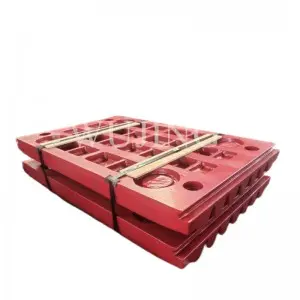
High-frequency replacement demand: Hammer heads, liners, jaw plates, and other cast iron parts suffer severe abrasive wear and impact loads, resulting in short replacement cycles and high annual procurement volumes per line.
Material adaptation demand: Most South American aggregates consist of high-hardness basalt and granite, requiring cast iron spare parts to have significantly higher wear and impact resistance than standard applications.
Regional demand differences: Mature markets such as Brazil and Argentina prioritize quality and service life; emerging markets such as Peru and Chile focus more on cost and delivery efficiency.
From 2024 to 2026, the South American cast iron spare parts market for aggregates maintains a CAGR of over 12%. Wear-resistant cast iron parts such as high-chromium cast iron and medium-chromium cast iron account for more than 60% of market demand, forming the dominant product category.
2. Competitive Landscape and Player Profiles in South America’s Cast Iron Spare Parts Market
The market consists of three major participants: international brand suppliers, regional importers, and local foundries. Each competes based on distinct strengths, forming a segmented competitive structure.
2.1 International Brand Suppliers: Dominating the High-End Market
Leading global foundries occupy over 70% of the high-end market through mature wear-resistant casting technology, consistent product quality, and global supply chains. They primarily serve large producers such as Vale and international infrastructure projects.
Their products focus on high-chromium and multi-alloy cast iron parts, offering excellent wear resistance and long service life. However, prices are high, lead times are affected by global logistics, and customization for local South American conditions is limited.
2.2 Regional Importers: Strong Channel Advantages for Small-to-Medium Producers
Local South American regional importers form the core distribution channel, sourcing parts from global foundries and supplying small-to-medium aggregate producers via local warehousing, logistics, and after-sales networks.
Key strengths include fast delivery and responsive service. However, product quality varies greatly, and some importers use low-cost, low-performance cast iron parts that risk premature failure.
2.3 Local Foundries: Cost Leadership in the Low-to-Mid Market
Local foundries in Brazil, Argentina, and other countries enjoy reduced logistics and tariff costs, with prices 30%–50% lower than international brands. They mainly supply ordinary cast iron and low-chromium parts for small-scale production lines.
Challenges include outdated technology, inconsistent material formulas, and unstable quality. Spare parts often have short service lives and struggle to withstand high-hardness aggregate crushing.
Competition has shifted from pure price to a comprehensive battle of quality, adaptability, and service. Suppliers that match local working conditions, offer customization, and provide efficient after-sales support will lead the market.
3. Material Performance Requirements for Cast Iron Spare Parts Under South American Aggregate Production Conditions
South America’s harsh operating conditions — high-hardness feed, heavy-duty continuous operation, high temperature and high humidity — impose strict requirements on cast iron spare parts, focusing on wear resistance, impact resistance, heat resistance, and casting precision.
3.1 Core Performance Requirements
Wear resistance: With basalt and granite (Mohs hardness 6–8), cast iron parts require ≥HRC55 hardness. High-chromium cast iron forms M7C3 hard carbides through optimized Cr/C ratios for exceptional wear life.
Impact resistance: Parts in impact and jaw crushers endure repeated shocks, requiring balanced hardness and toughness to avoid brittle fracture. Medium-chromium cast iron achieves this via air quenching and low-temperature tempering.
Heat and corrosion resistance: Tropical high-temperature and high-humidity environments demand resistance to softening and rust.
Casting precision: Cone crusher parts such as cone sleeves and bowl liners require tight dimensional tolerances to avoid excessive clearance, vibration, and accelerated wear.
4. Application Scenarios and Cost-Performance Analysis of Different Cast Iron Materials
The biggest procurement challenge for South American aggregate producers is accurate material-to-condition matching. Ordinary cast iron, medium-chromium cast iron, and high-chromium cast iron differ sharply in performance, application, and total cost of ownership.
4.1 Ordinary Cast Iron Parts: Low Value, Only for Light Loads
With carbon content of 2.5%–3.8% and no alloying elements, hardness is ≤HRC40 and wear resistance is poor. Suitable only for limestone and dolomite light crushing.
Price is only 1/5 of high-chromium cast iron, but service life is extremely short, leading to high overall usage cost and frequent downtime. Suitable only for emergency use on small production lines.
4.2 Medium-Chromium Cast Iron Parts: Best Cost-Performance for Moderate Conditions
Containing 5%–10% chromium, treated by air quenching and tempering to form martensite and composite carbides, with hardness HRC50–55. Balances wear resistance and toughness.
Ideal for medium-hardness mixed materials and moderate-duty operation, such as small-to-medium jaw crushers and vibrating screens. Price is 1/2–2/3 of high-chromium parts, with service life 3–5 times that of ordinary cast iron. This is the most cost-effective choice in South America.
4.3 High-Chromium Cast Iron Parts: Premium for Severe, High-Hardness Conditions
With chromium content ≥12% (typical grades Cr15, Cr20, Cr25) and Cr/C ratio 4–8, it forms isolated M7C3 carbides with hardness HRC58–65. Wear resistance is 8–10 times ordinary cast iron and 2–3 times medium-chromium iron.
Designed for high-hardness basalt/granite and heavy continuous crushing in large impact and cone crushers. Although upfront cost is high, long service life reduces downtime and delivers lower total cost of ownership, making it the top choice for large producers in Brazil and Argentina.
Cost-performance summary:
Medium-chromium cast iron: best all-around value
High-chromium cast iron: optimal for severe conditions
Ordinary cast iron: only for emergency use
5. Core Pain Points and Procurement Challenges in South America’s Cast Iron Spare Parts Market
Despite strong market demand, South American aggregate producers face severe procurement challenges across four dimensions:
5.1 Inconsistent Product Quality and Difficult Quality Verification
Many low-quality parts use substandard alloys and simplified heat treatment, leading to performance below labeled specifications. Most producers lack professional material testing capabilities, risking equipment damage and production losses.
5.2 Mismatched Parts and Working Conditions Raise Total Cost
Most suppliers offer only standardized products without customization for regional aggregate hardness or operating intensity. Producers either overspend on high-chromium parts or under-specify, leading to frequent failures.
5.3 Tariff and Logistics Volatility Increase Cost Uncertainty
Import policies vary widely. While Argentina reduced tariffs, Brazil and Peru maintain high duties. Long ocean freight times and cost fluctuations make budgeting difficult.
5.4 Low Supply Chain Efficiency and Poor After-Sales Responsiveness
International brands offer weak local support with long replacement cycles. Local suppliers respond quickly but suffer from poor quality. Producers face a dilemma: high-quality parts lack support; well-supported parts lack quality.
5.5 Fragmented Channels and Weak Bargaining Power
Multi-layer distribution inflates end prices. Smaller producers lack volume leverage and cannot negotiate favorable pricing or terms.
6. Core Principles of Differentiated Cast Iron Spare Parts Procurement Based on Working Condition Matching
To address regional conditions and market pain points, producers should follow the core strategy:“Materials determined by working conditions, channels determined by scale, strategies determined by region”.
6.1 Materials Determined by Working Conditions
High-hardness basalt/granite & heavy load: Cr15/Cr20 high-chromium cast iron
Medium-hardness mixed materials & moderate load: 5%–10% medium-chromium cast iron
Low-hardness limestone & light intermittent use: ordinary cast iron (emergency only)
Require material test reports and heat treatment records verifying hardness, carbide structure, and chemical composition.
6.2 Channels Determined by Production Scale
Large producers (≥100 tons/year): Direct long-term contracts with international brands or foundries; establish local warehousing.
Medium producers (10–100 tons/year): Partner with reputable regional importers; form group purchasing for better pricing.
Small producers (<10 tons/year): Combine imported medium/high-chromium parts for critical equipment with local ordinary parts for auxiliary units.
6.3 Regional Strategies Aligned with Local Policies
Low-tariff countries (Argentina, Uruguay): prioritize imported high-quality parts
High-tariff countries (Brazil, Peru): use suppliers with local production or bonded warehouses
Logistically challenging areas (Colombia, Ecuador): choose importers with local stock and fast delivery
6.4 Strict Quality Access System
Establish supplier qualification standards covering material performance, casting processes, and after-sales service. Conduct incoming inspections for hardness and dimensional accuracy to ensure compliance.
7. Regional Optimization Strategies for Cast Iron Spare Parts Procurement Channels in South America
Channel optimization is critical to implementing differentiated procurement. Focus on channel integration, local warehousing, strategic cooperation, and diversified sourcing.
7.1 Channel Integration to Reduce Middleman Costs
Large producers buy direct; smaller producers form purchasing alliances to consolidate volume and secure better factory pricing.
7.2 Local Warehousing for Faster Delivery
Set up regional spare parts centers in logistics hubs such as São Paulo and Buenos Aires. Reduce lead time from 30–45 days to 3–7 days for emergency response.
7.3 Strategic Partnerships for Customized Solutions
Collaborate with capable foundries to customize Cr/C ratios, heat treatment processes, and geometries for local feed conditions. Negotiate warranty, technical support, and fast replacement terms.
7.4 Diversified Sourcing to Reduce Supply Chain Risk
Use “imported core parts + local auxiliary parts”. Maintain 2–3 backup suppliers to avoid single-point failure and production halts.

8. Cost Control and Supply Chain Management Tips for Cast Iron Spare Parts Procurement
Producers must balance quality, cost, and supply efficiency using these best practices:
8.1 Shift Focus from Purchase Price to Total Cost of Ownership
Evaluate based on service life, replacement frequency, and downtime losses rather than upfront cost. High-chromium parts often yield lower total cost despite higher initial price.
8.2 Dynamic Safety Stock Management
Maintain 3–6 months of stock for high-wear parts (hammers, jaw plates) and 1–2 months for precision components. Use supplier warehouses to reduce inventory holding costs.
8.3 Supply Chain Collaboration and Data Sharing
Share consumption forecasts with key suppliers to enable just-in-time production and delivery, minimizing stockouts and overstock.
8.4 Full Lifecycle Management
Record procurement, installation, performance, and replacement data to refine future sourcing. Optimize equipment operation and maintenance to extend part life.
9. FAQs
Q1: For high-hardness aggregate crushing in South America, should I choose medium-chromium or high-chromium cast iron parts?A: High-chromium (Cr15/Cr20) is preferred. It delivers M7C3 carbides with extreme wear resistance, 2–3 times longer life than medium-chromium, reducing downtime and total cost.
Q2: What benefits do Argentina’s tariff cuts bring to cast iron spare parts procurement?A: Tariffs reduced to 2%–12.6% directly lower import costs. More international suppliers enter the market, increasing competition and improving pricing and options.
Q3: How to quickly verify genuine high-chromium cast iron parts in South America?A: 1) Test hardness ≥HRC58; 2) Request material test reports showing Cr content and Cr/C ratio; 3) Verify quenching + tempering heat treatment and martensite + M7C3 microstructure.
Q4: How can small-to-medium South American aggregate producers improve bargaining power?A: Form regional purchasing alliances to aggregate volume. Build long-term relationships with regional importers for better pricing and support.
Q5: How does the Cr/C ratio affect high-chromium parts in South American crushing conditions?A: Recommended ratio: 4–8. This forms isolated M7C3 carbides for balanced wear resistance and toughness. Too low = brittle M3C network; too high = reduced wear resistance.
Q6: How to extend part life in high-temperature, high-humidity South American environments?A: Choose anti-corrosion surface treatment; clean material residue after use; apply regular lubrication and rust prevention; improve equipment cooling.
Q7: What is the core difference between international suppliers and local foundries in South America?A: International suppliers offer superior quality, wear life, and stability but at higher cost with longer lead times and weak local support. Local suppliers are cheap and fast but inconsistent and less durable.
Q8: How to establish an emergency procurement strategy for unexpected breakdowns?A: Partner with stocked regional importers; maintain safety stock for critical parts; use multiple backup suppliers to ensure supply stability.
10. Conclusion
Competition in South America’s cast iron spare parts market for aggregate producers is ultimately a race for quality, adaptability, and supply chain efficiency. The current landscape features international brands competing with local foundries across high-end and economy segments.
Harsh high-hardness operating conditions, varying import policies, and regional preferences require producers to abandon one-size-fits-all purchasing and adopt differentiated strategies based on working conditions, regional policies, and production scale.
The core of differentiated procurement is precision matching: selecting the right cast iron material based on aggregate hardness and equipment duty; choosing optimal channels based on scale and location; shifting from price-only to total-cost thinking.
Medium-chromium cast iron will remain the best value mainstream choice, while high-chromium cast iron will dominate severe crushing applications.
For South American aggregate producers, scientific differentiated procurement delivers cost control, quality assurance, and improved equipment uptime, directly reducing downtime losses and building sustainable competitive advantage.
As the industry upgrades and casting technology advances, suppliers offering customization, local support, and high performance will lead the market. Producers who partner with such suppliers will achieve significant gains in both operational efficiency and profitability.
Post time: Mar-31-2026