
Equipment Scrapping Criteria: How Long Should a Crusher Operate Before Considering Replacement or Overhaul?
Crusher scrapping criteria are not solely determined by years of service. Many cross-border buyers and mining enterprises have misjudged equipment condition, leading either to costly overhauls or delayed replacements that cause production interruptions and safety hazards. This article breaks down the core factors for determining crusher replacement versus overhaul, offering scenario-based decision-making solutions to help balance costs and production efficiency. Below, we analyze these factors step by step, covering core assessment criteria and scenario-specific variations.
Core Assessment Criteria: Beyond Service Life, Which Metrics Matter Most?
While crushers typically have a design lifespan of 8-12 years, actual replacement or overhaul decisions depend more critically on component wear rates, production efficiency decline, and safety risk levels—with service life serving only as a baseline reference. Key thresholds for evaluation include:
- Component wear exceeding 60%
- Production efficiency dropping over 30% compared to new equipment
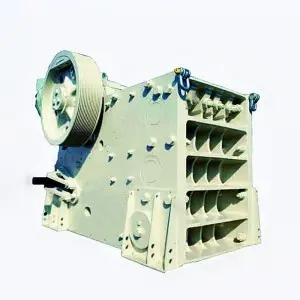
At one open-pit mine, a 9-year-old jaw crusher had reached 65% component wear. Though not yet at its design lifespan limit, it frequently experienced liner plate loosening and bearing overheating, resulting in over 10 hours of monthly downtime for maintenance and a cumulative production loss exceeding 20%.
Purchasers often ask: Should we overhaul or replace equipment when parts fail frequently despite not reaching design lifespan? If the core frame and main shaft show no severe damage, prioritize overhauling with high-wear-resistant parts. This costs only 30%-40% of a new machine, offering better cost-effectiveness.
Operating Conditions Determine Lifecycle: Does Crushers’ Lifespan Vary by Application?
Operating intensity directly impacts crusher lifespan. In heavy-duty scenarios like mining hard rock or processing construction waste, equipment wear accelerates by 30%-40% compared to light-duty building material crushing. Correspondingly, major overhaul cycles should be shortened to every 2-3 years, with replacement cycles advanced by 1-2 years.
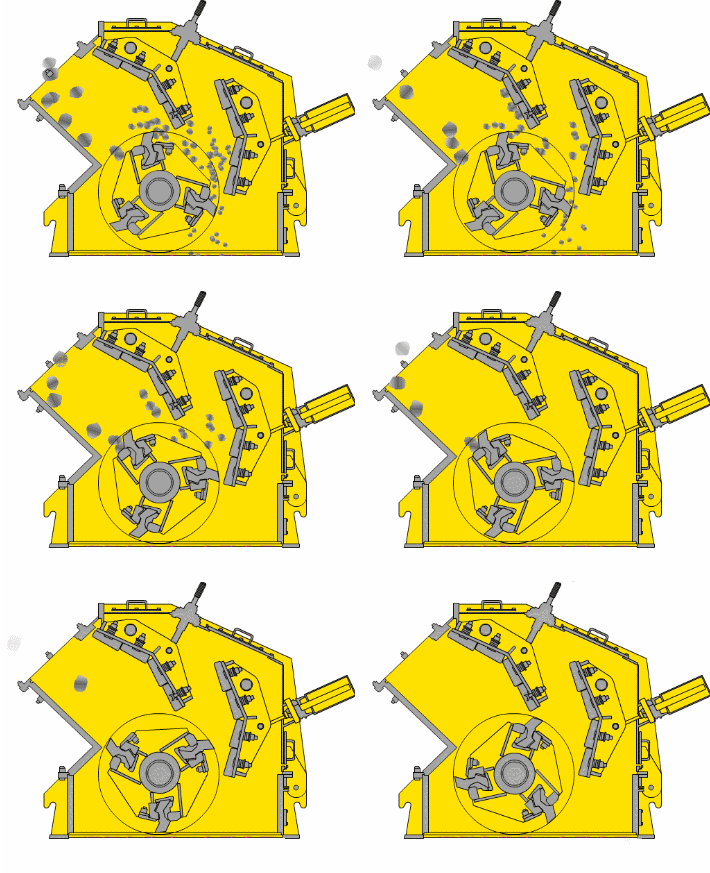
We once provided a parts solution for a Southeast Asian construction waste processing plant. Their impact crusher, subjected to prolonged concrete block processing, exhibited frame deformation after just 7 years of operation. An assessment indicated that major repairs would require replacing core components at a cost approaching 50% of a new machine. Ultimately, we recommended direct replacement.
Users often wonder: Can crushers in light-load scenarios continue operating beyond 12 years? As long as wear parts are replaced regularly, comprehensive annual inspections are conducted, production efficiency remains satisfactory, and no safety hazards exist, extending service life by 1-2 years in light-load scenarios is entirely feasible.
Parts Wear: How to Predict Scrap Timing Through Condition Monitoring?
The wear status of crusher components is key to predicting scrap timing. The replacement frequency of wear parts like liners, hammers, and bearings directly reflects core equipment performance. If identical parts require replacement more than twice monthly, or if replacement lifespan falls below two weeks, it signals imminent equipment failure.
At one sand and gravel plant, an 8-year-old cone crusher saw its hammer replacement cycle shorten from 3 months to 10 days. Post-replacement, inconsistent output particle size persisted. Inspection revealed excessive main shaft wear, with subsequent overhaul costs deemed prohibitively high, leading to equipment replacement.
Many customers ask: Can replacing all wear parts extend equipment lifespan? If core structures remain undamaged, installing high-compatibility wear-resistant components can extend service life by 1-2 years. However, this requires standardized operation and maintenance; otherwise, it will only accelerate equipment aging.
FAQ: High-Frequency Questions on Crusher Replacement vs. Overhaul
1. What is a reasonable cost range for a crusher overhaul? Overhaul costs should ideally not exceed 40% of the new machine price. If costs surpass this threshold and the equipment has been in service for over 8 years, consider replacement to avoid recurring repairs and escalating costs.
2. How to determine if a used crusher is worth purchasing? Focus on inspecting core component wear levels. A used crusher with no frame or main shaft deformation, less than 30% wear rate on components, under 6 years of service, and complete maintenance records offers better value.
3. Must a crusher be scrapped immediately after identifying safety hazards? If hazards stem solely from worn consumable parts, replacement and proper maintenance allow continued operation. However, irreversible damage to core structures necessitates immediate scrapping and replacement to mitigate risks.
Determining whether to replace or overhaul a crusher requires comprehensive evaluation of service life, operating conditions, component status, and cost-benefit analysis—not reliance on a single metric. Timely decisions enable cost control through overhauls while ensuring production efficiency through timely replacements. Precise control over crusher scrapping standards is key to enhancing profitability for mining and processing enterprises.
Meta Description
This article analyzes crusher scrapping standards, breaking free from single-use lifespan constraints. It provides replacement and overhaul decision-making solutions based on component wear and operational variations, helping cross-border buyers and mining enterprises avoid cost wastage and safety hazards. Master core assessment criteria to boost production efficiency—bookmark now for future reference!
Keywords
crusher scrapping criteria, crusher overhaul assessment basis, mining crusher replacement cycle, crusher component wear-scrapping correlation, wear-resistant crusher component selection
Post time: Jan-26-2026