
Factory Audit Checklist: Key Details to Focus on During Manufacturing Facility Visits
The factory audit checklist serves as a core tool for cross-border purchasers of crusher components to mitigate collaboration risks. Many buyers focus solely on surface-level scale during audits while overlooking process control and quality assurance details. This oversight often results in received jaw plates and hammer heads exhibiting insufficient wear resistance, dimensional deviations, and other issues, leading to skyrocketing rework costs. This article breaks down critical inspection details and evaluation criteria to help you accurately screen high-quality suppliers and reduce procurement risks. Below, we systematically outline essential inspection points across core production stages.
Casting Process Control: How to Ensure Wear Resistance in Crusher Parts?
The wear resistance of crusher parts fundamentally depends on casting processes. Inspections must rigorously verify three key stages: melting, sand molding, and heat treatment. High-manganese steel components require strict control of the carbon-manganese ratio around 1:10, employing a dual-process of electric arc furnace + refining furnace to ensure molten steel purity meets standards.
A Southeast Asian buyer’s partner factory once omitted the refining step, resulting in cone crusher bowl liners failing after only 200 hours of operation due to wear. After switching to a manufacturer with controlled processes, UT flaw detection pass rates reached 98.2%, extending component lifespan by over 30%.
Some buyers question: How can one quickly assess process compliance without observing the full casting workflow? Review furnace temperature logs and heat treatment parameters—water quenching temperatures must stabilize between 1050-1100°C, with unpacking temperatures below 200°C to meet standards.
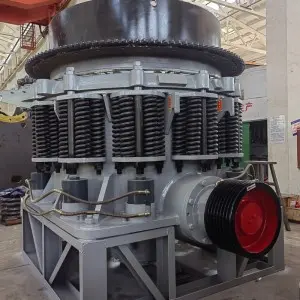
Quality Control Inspection Process: How to Ensure Component Precision and Performance Compliance?
Premium manufacturers must establish comprehensive quality control systems. During factory audits, verify testing equipment, sampling standards, and defect traceability mechanisms. Critical components require Brinell or Rockwell hardness testing. High-manganese steel parts must achieve initial hardness ≥ HB200 and post-work-hardening hardness ≥ HB500.
During an audit of a mining equipment wholesaler, only factory inspection reports were verified without on-site testing procedures, resulting in batch returns of hammer heads due to substandard hardness. Subsequent audits focused on cross-checking inspection records with on-site sampling, reducing post-sales disputes by 70%.
Common Question: Can third-party test reports replace factory self-inspection records? No. Third-party reports serve only as reference. Manufacturers must provide self-inspection data for each batch, with particular focus on consistency in critical metrics like dimensional deviations and surface defects.
Production Capacity and Supply Chain: How to Align with Cross-Border Procurement Delivery Requirements?
Cross-border procurement demands exceptional delivery stability. Factory audits must evaluate equipment utilization rates, raw material reserves, and production capacity redundancy. The operational status of core equipment like CNC lathes and heat treatment furnaces is critical. Additionally, verify supplier qualifications for high-manganese steel and alloy materials.
A European buyer once experienced 45-day delays in accessory deliveries during peak season due to failing to verify factory capacity flexibility. After optimizing the factory audit process—focusing on equipment load rates (below 75% is safer) and raw material safety stock—on-time delivery rates improved to over 95%.
Frequently asked: Does larger factory scale automatically mean stronger supply capability? Not necessarily. The key lies in matching capacity to order volume. Small-to-medium manufacturers with mature processes and ample capacity redundancy often respond more flexibly to cross-border small-batch, multi-order procurement demands.
Compliance and After-Sales: How to Mitigate Hidden Risks in Cross-Border Collaboration?
Cross-border collaborations require attention to environmental compliance and after-sales guarantees. During factory audits, verify environmental certifications and the operational status of dust treatment equipment. Simultaneously, clarify the warranty period for spare parts and fault resolution solutions, particularly warranty terms for wear-resistant components.
A buyer faced customs clearance delays due to a partner factory lacking environmental certification, incurring substantial demurrage fees. Subsequent factory audits must prioritize environmental qualifications, selecting manufacturers certified for dust and wastewater treatment compliance to completely avoid such risks.
Purchaser’s Question: Is a verbal after-sales commitment sufficient? No. The warranty scope must be explicitly stated in the contract, e.g., jaw plates and hammer heads with a minimum warranty period of 1,000 hours. Additionally, stipulate the lead time for replacement parts and logistics responsibility.
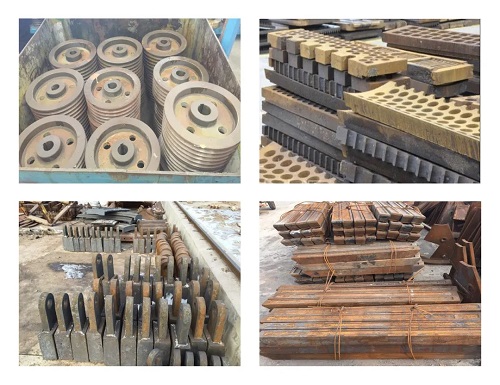
FAQ: Frequently Asked Questions
1. How can wear resistance of crusher parts be quickly assessed during factory inspections? Conduct on-site hardness sampling of components. Review manufacturer process records, focusing on carbon-manganese ratios and heat treatment parameters. Request documented case studies of similar products in actual installed applications.
2. What additional factory inspection points should be emphasized for cross-border crusher part procurement? Verify export qualifications and customs clearance proficiency. Confirm packaging meets cross-border shipping standards to prevent damage or deformation during transit.
3. Are parts from small manufacturing bases inherently inferior to those from large factories? Not necessarily. Small facilities focused on core processes with strict quality control can excel in refining high-manganese steel and alloy wear-resistant components, often offering more flexible customization.
When sourcing crusher parts cross-border, factory audits are crucial for quality control and risk mitigation. These inspections must go beyond superficial observations, delving into core details like manufacturing processes, quality control, and production capacity. Only by meticulously addressing every audit criterion can reliable suppliers be identified, ensuring end-users receive stable, durable components—the very essence of factory audit checklists.
SEO Supporting Elements
Meta Description: The factory audit checklist is the risk control cornerstone for cross-border procurement of crusher parts. This article dissects 15 critical details—including casting processes, quality control, and production capacity—paired with real-world case studies and pitfall avoidance techniques. Empower buyers to select premium suppliers by accessing our professional factory audit guide now.
Keywords: Crusher parts factory audit checklist, High-manganese steel crusher parts factory audit, Crusher wear parts quality control review, Cross-border procurement crusher parts factory audit standards
Post time: Jan-28-2026