
High Efficiency & Energy Savings: Our compound swing jaw crusher achieves up to 30% greater energy savings compared to traditional models.
High Efficiency & Energy Savings: Our compound swing jaw crusher achieves up to 30% greater energy savings compared to traditional models. This isn’t hype—it’s hard-nosed production math. Many cross-border buyers focus solely on price when purchasing equipment, only to see electricity costs devour most of their annual profits. End consumers complain about machines that struggle and guzzle power. B2B clients face immense pressure from environmental audits.
High energy consumption not only burns cash but also slows production capacity, undermining bidding competitiveness. This article dissects the structural intricacies of the compound swing jaw crusher, revealing where energy savings originate, how to validate them, and how to select the right model. After reading, you’ll be able to determine if it suits your operational conditions and understand how energy efficiency translates into tangible financial gains. Let’s dive in.
① Structural Design Optimization — Where Do Energy Savings Begin?
Traditional jaw crushers feature a single swinging trajectory for the moving jaw, causing concentrated stress and significant motor load fluctuations.
The compound swing jaw crusher adopts a dual-cam + variable-track mechanism. This enables smoother moving jaw motion and more uniform material engagement.
Benefits: Reduces ineffective impacts and flattens the motor load curve. Under equivalent output, peak current drops significantly.
Case Study: In 2022, a Vietnamese quarry replaced its 55kW traditional jaw crusher with our compound swing jaw crusher. At equivalent output, the average electricity meter reading decreased by 27.6%, saving approximately $4,200 in annual electricity costs.
User Concern: Will changing the structure increase failure rates?
Answer: Slightly higher initially due to stringent component fitting tolerances. However, once stabilized, wear becomes more uniform, actually extending overhaul intervals.
Key Point: Ensure thorough assembly calibration—never rush or skip steps.
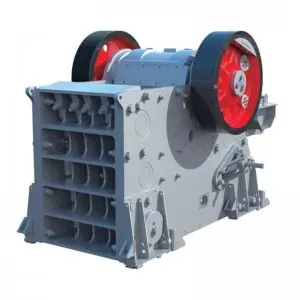
② Motor-Drive Matching—True Energy Savings Lie in Avoiding Power Waste
Many plants operate equipment with excessive power reserves solely to handle momentary surges.
Compound swing jaw crushers paired with variable frequency starters + wide-frequency motors. Speed automatically adjusts based on material hardness.
Low speed for hard materials to maintain torque, high speed for soft materials to boost throughput. Avoids full-power idling throughout operation.
Data: A domestic building materials group’s comparative test showed traditional machines’ no-load power consumption accounted for 18% of total energy use; the compound model reduced no-load ratio to 9% through speed control.
User Question: Are variable frequency systems more prone to failure?
Answer: Depends on environment and maintenance. Frequent filter replacement in dusty conditions and proper moisture protection are essential. Qualified variable frequency systems can last 8–10 years.
Recommendation: Focus on operational compatibility, not just motor power.
③ Crushing Chamber Design & Wear Part Layout—Can They Reduce Consumption and Extend Lifespan?
An ill-designed chamber causes excessive material recirculation and repeated crushing, resulting in wasted energy consumption.
The composite swing jaw crusher features a narrowed feed opening and deepened engagement zone, enabling single-pass material flow with minimal recirculation.
Wear parts are arranged according to a wear gradient design. High-chromium alloy is used in high-stress zones, while high-manganese steel is employed in secondary zones.
Case Study: At a South African gold mine’s crushing workshop, original equipment required jaw plate replacement twice monthly. After switching to the composite model and optimizing the chamber design, jaw plate lifespan extended to 5 months, with power consumption per ton of material reduced by 11%.
User Question: Is high-quality wear parts sufficient?
Answer: No. Chamber design and part configuration must be adjusted together. Otherwise, localized rapid wear compromises overall energy efficiency.
Tip: Conduct wear simulations during initial installation to predict replacement cycles.
④ Field Validation — How to Avoid “Inflated Claims” in Energy Savings Data?
A 30% energy reduction sounds impressive, but does it hold up in practice? Real-world testing is essential.
Method: Compare electricity consumption and output under identical conditions—same operating parameters, raw materials, and shift schedules.
Note: Eliminate external factors like grid fluctuations and temperature variations. Ideally, measure continuously for one week and calculate the average.
Data: For an Indonesian client, after adjusting for peak/off-peak electricity rates, the composite swing jaw crusher averaged 326 kWh daily, compared to 464 kWh for the traditional model—a 29.7% energy savings.
User Question: What if small factories lack professional meters?
A: Use a clamp meter to periodically measure current and estimate based on operating hours. Experienced technicians can also make reasonably accurate estimates using meter rotation counts.
Recommendation: Request on-site testing videos or third-party reports from suppliers for greater assurance.
FAQ Section
Q1: Is the composite swing jaw crusher suitable for all hard rock crushing?
A: Not suitable for extremely high-load conditions like ultra-hard granite. More suitable for conventional hard materials such as limestone, basalt, and iron ore.
Q2: Does the energy-saving effect diminish over time?
A: Yes, due to cavity shape changes and increased component clearances caused by wear. Regular maintenance can limit the decline to within 5%.
Q3: What should be noted for cross-border transportation of this equipment?
A: Clearly mark the center of gravity. Protect motors from moisture. Pack wear parts separately with waterproofing. Power up and test run promptly upon arrival.
High Efficiency & Energy Savings: Our composite swing jaw crusher achieves up to 30% greater energy savings than traditional models. This isn’t just a numerical advantage—it’s a watershed in long-term operational costs. For cross-border buyers, it’s key to lowering total cost of ownership. For end consumers, it means reduced electricity bills. For B2B clients, it represents tangible strength in balancing environmental responsibility with profitability. Seizing this trend is essential to gain a competitive edge in both crusher components and complete machine markets.
Meta Description:
High Efficiency & Energy Savings: Our composite swing jaw crusher achieves up to 30% greater energy efficiency than conventional models. Discover how structural, transmission, and chamber design optimizations deliver tangible savings, empowering cross-border buyers, end consumers, and B2B clients to reduce costs and boost efficiency. Discover real-world test data and selection recommendations to optimize your crushing equipment solutions.
Keywords:
High-efficiency energy-saving compound pendulum jaw crusher; Energy-saving retrofits for crusher components; Jaw crusher energy-saving technology; Cross-border crushing equipment selection; Application cases of compound pendulum jaw crushers
Post time: Dec-31-2025