
Logistics & Customs Clearance Guide: Practice for Ocean Shipping, Insurance and Destination Port Clearance of Large & Heavy Equipment
Opening Introduction
Logistics & Customs Clearance Guide: Practice for Ocean Shipping, Insurance and Destination Port Clearance of Large & Heavy Equipment is one of the most troublesome problems for cross-border purchasers and wholesalers of crusher parts. Large and heavy crusher parts (such as hammers, liners, rotors) are large in volume and heavy in weight, prone to damage and delay during ocean shipping. Improper insurance configuration can lead to huge losses. Incomplete customs clearance documents and unfamiliar processes at the destination port can also result in port detention and fines, seriously affecting the supply cycle and cost control. In fact, as long as you master the core practical skills, you can avoid these pitfalls and achieve efficient ocean shipping, safe insurance, and smooth customs clearance. After reading this article, you can fully grasp the ocean shipping process, insurance configuration points, and destination port clearance skills for large and heavy equipment, reduce logistics risks, control costs, and ensure smooth supply. Below, we will break down the practical details from the three core links of ocean shipping, insurance, and customs clearance, combined with real industry scenarios, to help you completely solve the worries of logistics and customs clearance.
1. Ocean Shipping of Large & Heavy Equipment: Choose the Right Plan to Avoid Damage and Delay Risks
Ocean shipping of large and heavy crusher parts is essentially different from that of ordinary goods. The core pain points are “easy to be damaged and easy to be delayed”. Many purchasers, because they did not choose the right ocean shipping plan, either the goods are damaged and unusable, or the delivery is delayed and they face breach of contract, resulting in heavy losses.
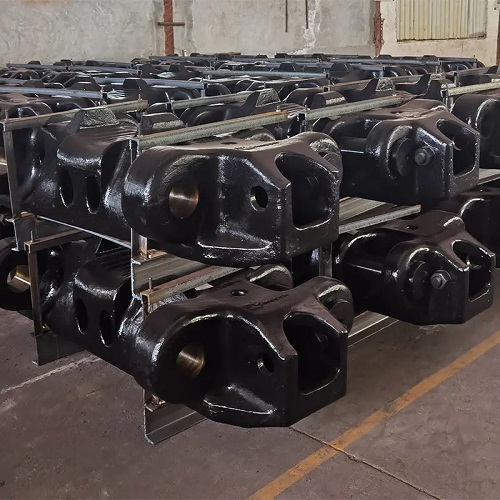
The core of choosing an ocean shipping plan lies in two points: packaging method and transportation channel. In terms of packaging, customized reinforced packaging must be adopted, such as thick steel plate base + shockproof foam + waterproof film, to prevent deformation and damage of parts caused by jolting and collision during transportation. In terms of transportation channels, priority should be given to special-line ocean shipping, which is more stable than ordinary ocean shipping, and can also provide door-to-door pickup and port delivery services, reducing intermediate links—this is the key to large & heavy equipment ocean shipping.
Real Case
We once worked with a European cross-border purchaser who bought a batch of heavy crusher hammers (single weight 500kg). Initially, he chose ordinary ocean shipping for cheap with simple packaging. As a result, after the goods arrived at the port, 30% of the hammers were deformed and cracked, unable to be put into use. He not only lost the cost of the goods but also delayed the construction period of the end customer and compensated for liquidated damages. Later, we helped him optimize the packaging with customized steel plate base + multi-layer shockproof packaging, and chose the special-line ocean shipping for crusher parts. In subsequent shipments, the goods damage rate was 0, and the delivery time was completely controllable—this is a practical example of avoiding risks in large & heavy equipment ocean shipping.
Common Purchaser Question: How to determine the transportation time for ocean shipping of large & heavy equipment to avoid delays?
It is actually very simple: confirm the route and sailing schedule with the shipping company in advance, reserve a 7-10 day buffer period, and clearly agree on the delay compensation clause. In addition, avoiding seasons with severe weather such as typhoons and heavy rains can also reduce the risk of delays—this is a key tip for cross-border equipment logistics.
2. Ocean Shipping Insurance Configuration: Accurate Insurance to Avoid the Pitfall of “Useless Insurance”
Large and heavy crusher parts are of high value and face many risks during ocean shipping (damage, loss, sinking, etc.). Many purchasers have bought insurance, but due to inaccurate insurance configuration, they cannot get compensation smoothly when risks occur, which is equivalent to paying premiums for nothing and bearing losses in vain.
The core of insurance configuration is “accurately matching risks and clarifying claim clauses”. First, choose the ocean shipping insurance type suitable for large and heavy equipment. Priority should be given to All Risks, which has the widest coverage and can cope with most ocean shipping risks (such as collision, jolting, rain damage, etc.). Second, the insured amount should be sufficient, insured according to the actual value of the goods, to avoid insufficient compensation due to insufficient insured amount during claim settlement—this is the core of crusher parts ocean shipping insurance.
It should also be noted that when purchasing insurance, you must clearly specify the specific information of the goods (name, specification, weight, value), as well as the transportation route and packaging method. At the same time, clarify the claim process and compensation time limit to avoid claim obstacles due to inconsistent information and ambiguous clauses.
Case Study
We shared a case of a Southeast Asian wholesaler: he purchased a batch of large crusher liners. When buying insurance, he only filled in “crusher parts” for convenience, did not specify the specifications and value, nor explained the packaging method. Later, the goods were damaged due to jolting during ocean shipping. When making a claim, the insurance company refused to pay on the grounds of “unclear goods information and non-compliant packaging”, and he had to bear a loss of more than 100,000 yuan. Later, we helped him standardize the insurance purchase process and clarify all goods information. In a subsequent minor damage to the goods, he successfully obtained full compensation—this is a practical lesson for accurate insurance configuration.
Common User Question: How to control the insurance cost for ocean shipping of large & heavy equipment?
Insurance costs are usually 0.5%-1% of the goods value. To control costs, you can negotiate bulk insurance discounts with the insurance company, optimize packaging to reduce transportation risks. After long-term cooperation, the insurance company will appropriately reduce the premium rate—this is a practical tip to control the cost of crusher parts ocean shipping insurance.
3. Destination Port Customs Clearance: Prepare Documents for Smooth Clearance Without Pitfalls
Destination port customs clearance is the “last hurdle” for cross-border transportation of large and heavy equipment. Many purchasers, due to incomplete documents and unfamiliarity with local customs clearance rules, lead to goods detention, high detention fees, and even seizure by customs, seriously affecting the supply progress—this is the key difficulty in equipment destination port customs clearance practice.
The core of customs clearance is “preparing documents and complying with local rules”. First, prepare all customs clearance documents in advance. The core includes commercial invoice, packing list, bill of lading, certificate of origin, and equipment manual. For crusher parts with special specifications, a customs-recognized test report is also required—this is the basis for smooth customs clearance.
Second, be familiar with the customs clearance rules of the destination port. Customs clearance requirements vary in different countries and regions. For example, the European market requires CE certification, the US market requires FDA certification, and some Southeast Asian countries require advance filing. Avoid customs clearance obstacles due to non-compliance with local rules—this is a key part of heavy equipment clearance skills.
Real Case
We have contacted a Middle Eastern purchaser who bought a batch of large crusher rotors. Because he was not familiar with local customs clearance rules and did not prepare the certificate of origin in advance, the goods were detained at the port for 15 days, resulting in high detention fees and almost being seized by customs. Later, we helped him supplement all documents and connect with a local customs clearance agent to successfully complete customs clearance, with an additional loss of tens of thousands of yuan. Since then, every time he makes a purchase, he consults us in advance and prepares all customs clearance documents, which greatly improves the customs clearance efficiency—this is a practical case of mastering equipment destination port customs clearance practice.
Common Question: Is it necessary to find a customs clearance agent for destination port customs clearance?
It is very necessary, especially for purchasers who are not familiar with local customs clearance rules. A customs clearance agent is familiar with local customs policies, can help you review documents and connect with customs, avoid document omissions and rule non-compliance, greatly improve customs clearance efficiency, and reduce the risk of port detention—this is a key tip for heavy equipment clearance skills.
FAQ: High-Frequency Questions About Ocean Shipping and Customs Clearance of Large & Heavy Equipment
1. What should be paid attention to in the packaging of large & heavy crusher parts for ocean shipping?
A: Priority should be given to customized reinforced packaging, fixed with a thick steel plate base, wrapped with shockproof foam and waterproof film on the outside, and marked with “Heavy Goods, Do Not Invert, Handle with Care” to avoid damage during transportation. At the same time, the packaging size should conform to the specifications of ocean shipping containers to reduce space waste and transportation costs—this is a key detail of large & heavy equipment ocean shipping.
2. What documents are needed for ocean shipping insurance claims?
A: Core documents include insurance policy, bill of lading, commercial invoice, packing list, goods damage/loss certificate (issued by customs or logistics company), and claim application. After preparing all documents and submitting them to the insurance company, the claim can usually be completed within 7-15 working days—this is a key detail of crusher parts ocean shipping insurance.
3. What are the core differences in customs clearance at destination ports in different countries?
A: The European market focuses on CE certification and environmental testing reports, with relatively standardized customs clearance processes. The US market focuses on FDA certification and tariff declaration, with strict inspection. The Southeast Asian market focuses on certificate of origin and goods filing, and some countries have low customs clearance efficiency, so sufficient time should be reserved—this is a key point of cross-border equipment logistics guide.
Conclusion
In fact, the core of ocean shipping, insurance, and destination port customs clearance for large & heavy equipment is not to “find the most expensive service”, but to “find the most suitable plan”—choose the right ocean shipping packaging and channel to avoid damage and delay; configure insurance accurately to cope with transportation risks; prepare customs clearance documents and be familiar with local rules to achieve smooth customs clearance. For cross-border purchasers and wholesalers of crusher parts, mastering these practical skills can not only reduce logistics costs and losses but also ensure smooth supply and improve end customer satisfaction. The core logic of Logistics & Customs Clearance Guide: Practice for Ocean Shipping, Insurance and Destination Port Clearance of Large & Heavy Equipment is “advance planning, accurate adaptation, and standardized operation”. We hope this article can help you avoid all pitfalls of logistics and customs clearance and achieve efficient cross-border transportation.
Meta Description
Logistics & Customs Clearance Guide: Practice for Ocean Shipping, Insurance and Destination Port Clearance of Large & Heavy Equipment focuses on the logistics pain points of cross-border procurement of crusher parts. It shares practical skills for ocean shipping plan selection, insurance configuration, and destination port customs clearance. Combined with real industry cases, it helps cross-border purchasers and wholesalers avoid risks such as damage, delay, and difficulty in claim settlement, control logistics costs, and ensure smooth customs clearance. Consult for targeted logistics and customs clearance plan suggestions at any time.
Core Keywords
large & heavy equipment ocean shipping, equipment destination port customs clearance practice, crusher parts ocean shipping insurance, heavy equipment clearance skills, cross-border equipment logistics guide
Post time: Mar-13-2026