
Conical crushers are highly efficient in hard rock and aggregate production. However, once the cavity gets clogged or filled with debris, stopping the machine to clear the cavity becomes a headache. The traditional method of knocking and manually probing takes a long time and is prone to damaging the equipment or personnel. A simple hydraulic cavity-clearing system that is easy to maintain is making this process faster and safer. After reading this article, you will understand its principle and effectiveness, and be able to determine if it is suitable for your machine model. Let’s break it down step by step: the pain points, the principle, and the on-site benefits.
The principle of the hydraulic cavity cleaning system: How to make the cavity cleaning process both efficient and controllable?
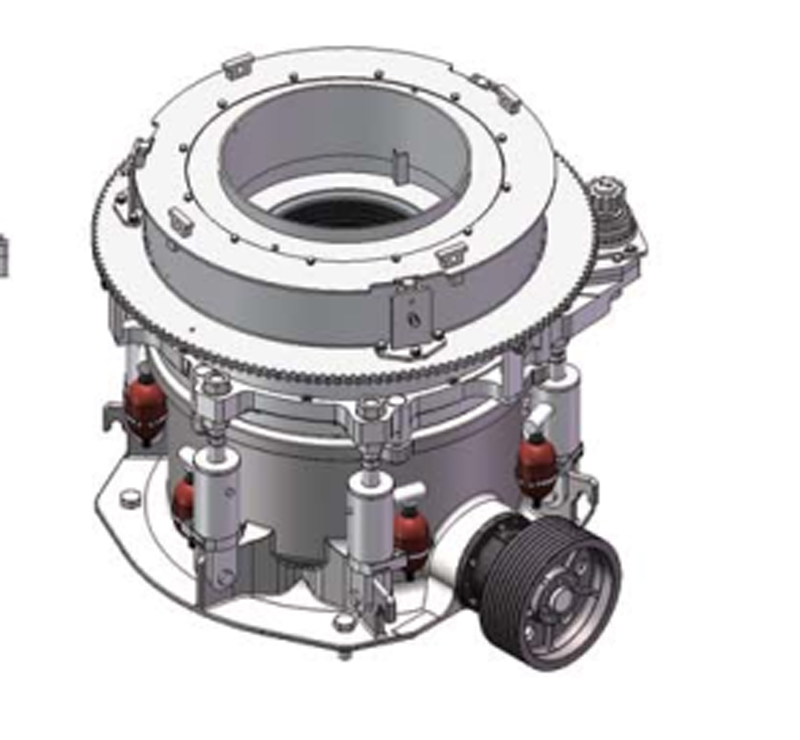
Hydraulic cavity cleaning involves using high-pressure oil to push the piston, thereby applying a directional impact force to the materials stuck in the crushing chamber. Unlike manual prying, the force is stable and the direction is controllable.
We have dealt with a customer from a South African gold mine. The old equipment required workers to climb into the chamber manually and hammer away. Each cleaning operation took 4 hours with 3 people involved, and there were even instances of hammer heads slipping and causing injuries. After installing hydraulic chamber cleaning equipment, it can be started with a single button press, and the cleaning process is completed in 15 minutes. No one enters the dangerous area and there are no work-related injuries.
Key points: The system is connected to the controller and has a pressure limit. The number and intervals of impacts can be adjusted, and it is suitable for different materials.
Question: Will hydraulic shock damage the cavity wall? Under reasonable pressure and frequency, only acting on the material holding block, it will not harm the liner plate.
Does reducing the time required for cleaning the cavity lead to an immediate increase in the equipment’s availability rate?
If the downtime for cleaning the machine is too long, the production volume will decrease. Frequent start-stop of the hydraulic system is equivalent to boosting the availability rate.
In a copper mine in Chile, the original cleaning cycle was approximately 2.5 hours per time, with a monthly downtime of 12 times, and the equipment availability rate was 81%. After upgrading the hydraulic cleaning system, the cycle was reduced to 0.4 hours per time, the monthly downtime was decreased to 8 times, and the availability rate was increased to 89%. The annual production of materials increased by approximately 42,000 tons.
Procedure: Pre-set the cleaning program. In case of an alarm, it will automatically or semi-automatically execute. This reduces waiting and coordination time.
Question: Will the automatic cleaning function trigger incorrectly? The system is designed to be linked with the material level or current abnormalities, resulting in a low false alarm rate, and it can also be manually intervened to cancel the alarm.
Where does the improvement in security lie? Can it reduce the risks in operation and maintenance?
Manual cavity cleaning requires close-up operation. The environment is dusty and the space is narrow, with high risks. Hydraulic remote operation is adopted to evacuate the workers to a safe area.
In a granite quarry in Brazil, in the past, it required two people to hold the pickaxes to enter. There was once an accident where the pickaxe rebounded and injured someone. After replacing with hydraulic cleaning equipment, the operator can complete the operation in the control room, with no one at the site. There have been no safety incidents in the past two years.
In addition, video surveillance and audio-visual alerts can be added to make the process more transparent.
Question: What should we do if the old model doesn’t have reserved installation positions? Many manufacturers offer side-mounted or top-mounted kits, so there is no need to significantly modify the main structure.
Is the hydraulic cavity cleaning system maintenance really that simple?
Simplicity does not mean no maintenance; rather, it means concentrating the work in easily accessible areas. The sealing of the oil cylinder, the filter elements of the oil circuit, and the inspection of the pump station can all be completed quickly from the outside.
In an Australian limestone mine, the oil cylinder of the original cleaning system leaked oil. The machine had to be shut down for two days before it was repaired. We replaced it with a quick-change sealing kit and installed a transparent oil path sight glass. Through daily inspections lasting only 10 minutes, we could detect the early signs. The time required for fault repair was reduced to 4 hours.
Suggestion: Conduct oil quality and pressure retention rate checks every 250 hours. Prepare key sealing components to reduce material waiting time.
Question: Is the frequency of hydraulic oil replacement high? Depending on the working conditions, it is generally replaced every 2,000 to 4,000 hours. This is even more cost-effective than the engine hydraulic system.
—
FAQ
Q1: Is the hydraulic cleaning system suitable for all cone crushers?
Most medium and large-sized hydraulic cones can be directly equipped. For spring machines, the structure and space need to be evaluated; some can be modified.
Q2: Can the clearing force be adjusted according to the material? OK. The controller can adjust the pressure and the number of impacts, and is suitable for different hardness of ores.
Q3: Will installing a hydraulic cavity cleaning system affect the original vehicle’s warranty?
For compliant modifications using original or certified kits, it generally won’t. It is recommended to confirm with the original manufacturer in advance.
—
In the upgrade of crusher accessories, maintenance is simple: The hydraulic cavity cleaning system makes the cleaning of the cone crusher cavity type quick and safe, saving not only time but also ensuring personnel safety and equipment availability. For cross-border buyers and B-end customers, this is a practical investment that minimizes downtime and reduces risks. If your cone crusher is still relying on manual hard cleaning, you might consider the hydraulic cavity cleaning system to make maintenance faster, more stable, and more reassuring.
Meta Description:
Easy maintenance: The hydraulic cavity cleaning system makes the cleaning of the cone crusher cavity type quick and safe, helping the buyers of crusher parts and B-end customers reduce downtime and lower safety risks. Detailed explanations of the principle, cases, and maintenance points are provided. Contact us immediately for an adapted solution.
Keywords:
Hydraulic cavity cleaning system, maintenance of cone crusher, cleaning of crusher cavity shape, upgrading of crusher parts, rapid cavity cleaning of cone crusher
Post time: Dec-29-2025