
For European EPC (Engineering, Procurement and Construction) contractors, the long-term stable operation of mineral processing production lines is central to project profitability.Among various mining equipment, the vibrating screen is not only critical to final aggregate quality but also one of the highest-failure, highest-maintenance-cost components in the entire production line.In the 2026 procurement cycle, balancing budget constraints with equipment reliability has become a key challenge for purchasing managers.
This article provides an in-depth cost-performance analysis of vibrating screens and their core wear parts across different brands, based on technical parameters, material composition, and total cost of ownership (TCO).
1. Core Performance Differences: Beyond Just “Screening”
When comparing brands, many buyers fall into the trap of price-only comparison while ignoring the hidden costs of vibrating screens in real engineering applications.Brand differences mainly appear in three dimensions:
Stability of Excitation Source & Motion Trajectory
High-end vibrating screens typically use heavy-duty box-type exciters to maintain consistent throwing motion even under full or overload conditions.By contrast, some economy brands use bearing-type exciters. Although their upfront cost is lower, they often suffer from amplitude attenuation when processing high-density ore, reducing screening efficiency and increasing the cost of re-circulating materials.
Structural Rigidity & Fatigue Life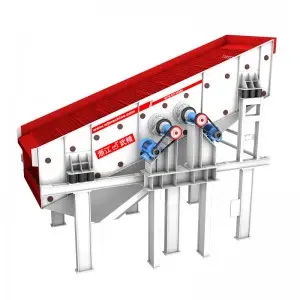
European job sites often demand continuous high-intensity operation.Top-tier brands use Finite Element Analysis (FEA) to optimize side plate and beam structures, preventing cracking under high-frequency vibration.Mid-range products rely heavily on welding quality and plate pretreatment.For EPC contractors, choosing vibrating screens with shot blasting and welding stress relief significantly reduces structural repair risks in the mid-to-late project phase.
Modular Design & Ease of Maintenance
In large-scale projects, downtime equals direct revenue loss.Leading vibrating screen brands adopt modular designs, allowing quick replacement of wear parts such as bearings and screen meshes without full disassembly.While this increases initial manufacturing costs, it saves substantial labor and time during on-site maintenance.
2. Material Comparison of Core Wear Parts: The Key to Long-Term Operating Costs
The cost-effectiveness of a vibrating screen depends not only on the main machine price but also on the consumption rate of supporting wear parts.Material selection differences directly define long-term operational expenses.
1. Screen Mesh Material Options
Spring Steel & High Manganese Steel:The most common combination. High manganese steel offers excellent work-hardening behavior, ideal for medium-hard rock.It delivers strong cost-performance for budget-limited projects under non-extreme conditions.
Polyurethane & Stainless Alloy Steel:In corrosive material processing or fine wet classification, polyurethane screens outperform metal screens in wear resistance and anti-clogging performance.Although more expensive upfront, their service life is 3–5 times longer than metal meshes, making them ideal for low-maintenance projects.
2. Bearing & Seal Grade
This is a frequently overlooked “hidden difference”.Top brands are equipped with original European or Japanese bearings and labyrinth seals to effectively prevent dust ingress.Cost-optimized brands often use standard industrial bearings, which are highly prone to overheating and failure in dusty mining environments, causing full machine shutdowns.
3. 2026 Procurement Recommendations: How to Develop a Smart Selection Strategy
To meet the specific demands of the European market, EPC contractors are advised to adopt the following strategies:
Reject “One-Size-Fits-All” Low-Price Bidding
In tender documents, require suppliers to provide inspection reports for core components (e.g., exciters, side plate material certificates).Avoid choosing brands based solely on low initial prices; instead, calculate comprehensive cost per ton of processed material.
Prioritize Local Service & Spare Parts Availability
For cross-border procurement, after-sales response speed is critical.Select brands with European agents or fast spare parts delivery to avoid huge penalties caused by maintenance delays.
Customize for Actual Working Conditions
Material characteristics (moisture, viscosity, hardness) vary by mine.Require suppliers to adjust screen inclination, amplitude, and frequency based on specific feed gradation, rather than forcing standard models into unsuitable conditions.
4. Conclusion
In Europe’s competitive engineering market, vibrating screen selection is an art of balance.It is not merely purchasing a machine, but investing in a sustained, reliable screening solution.
By analyzing differences in structural design, material application, and maintenance costs across brands, EPC contractors can control CAPEX (Capital Expenditure) while optimizing OPEX (Operational Expenditure), achieving stronger profit margins in project delivery.
#VibratingScreen #WearParts #HighManganeseSteel #AlloySteel #CastIron #HighChromiumCastIron #MediumChromiumCastIron #MiningEquipment #EPCContractor #CostPerformanceAnalysis
Post time: May-19-2026