
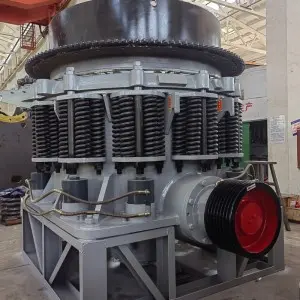
Excellent Particle Shape: The PYYQ Series Hydraulic Cone Crusher employs laminar crushing to produce cubical-shaped finished products.
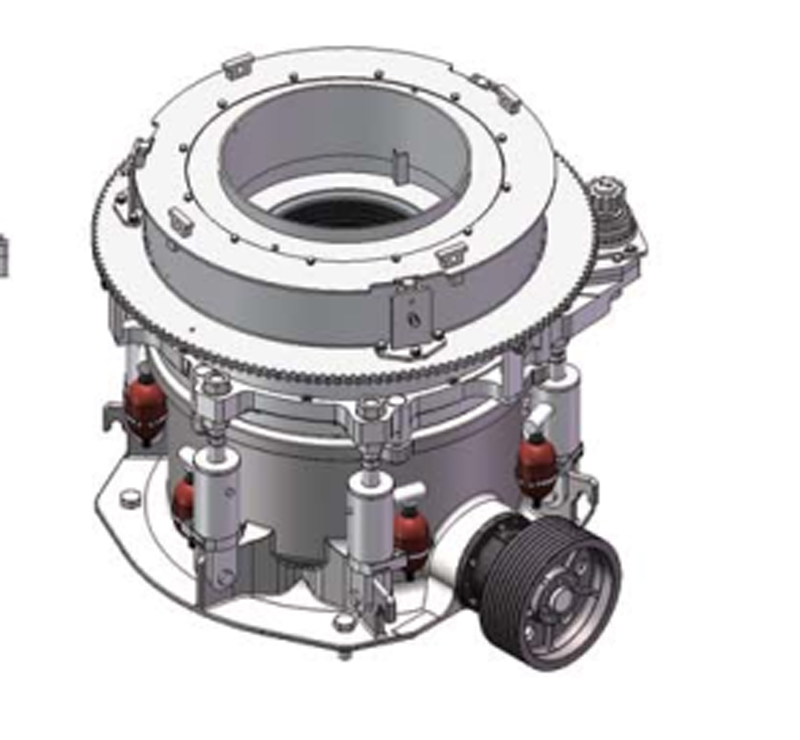
The PYYQ Series Hydraulic Cone Crusher is the core equipment for sand and gravel aggregate and mining crushing. Many enterprises struggle with excessive needle-shaped and flake-shaped particles in finished products, irregular particle shapes, resulting in low product premiums and difficulties in project acceptance. Cross-border buyers are even more concerned about non-compliance with target market construction standards, which could lead to product returns. This article dissects the advantages of laminar crushing technology, offering selection guidance, scenario adaptation, and cross-border compliance solutions. Below, we analyze its core competitiveness from technical principles, particle shape benefits, and cross-border adaptability perspectives.
Laminar Crushing: Why Does It Produce Cubic-Shaped Output?
Relying on core laminar crushing technology, it differs from traditional impact crushing. Upon entering the crushing chamber, materials are not broken by single-particle collisions.
Instead, particles are densely packed within the chamber, interacting and splitting along natural grain lines. Energy consumption per ton of material is just 0.53 kW·h/t, exceeding national standards.
After replacing traditional cone crushers with the PYYQ series at a large aggregate plant, needle and flake content dropped from 18% to 6%, while cubic particles exceeded 85%.
Some customers question whether laminar crushing sacrifices throughput. In fact, it does not. This series achieves a medium crushing capacity of up to 2450 t/h, balancing particle shape and efficiency.
Particle Shape Advantage: How Much Premium Value Does It Bring to End Customers?
Cubic finished products are highly recognized in the construction sector, directly enhancing product value and market competitiveness. Traditional crushed aggregates often feature flaky and needle-shaped particles, limiting their applications.
In highway and high-speed rail construction, cubic aggregates improve concrete density and reduce cement consumption.
After a concrete batching plant adopted this equipment, its recycled aggregate compliance rate jumped from 72% to 98%, with product prices increasing by 15 yuan per cubic meter.
Common Question: Is it suitable for diverse materials?
Whether processing granite, basalt, or limestone, it consistently produces high-quality granular products.
Cross-Border Compliance: What core standards must be met for exports to Europe and America?
Cross-border buyers should prioritize mechanical safety and environmental certifications, as distinct markets impose specific entry requirements to prevent customs clearance delays.
Exports to the EU require CE certification compliant with the Machinery Directive MD 2006/42/EC; North American markets demand adherence to ANSI B11.19 safety standards.
A cross-border equipment supplier exporting the PYYQ series to Europe achieved 60% annual order growth by meeting construction waste recycling standards, primarily serving old town renovation projects.
Some may ask: Do equipment parameters require targeted adjustments? No major modifications are needed—optimizing inspection documentation suffices to adapt to diverse market demands.
Application Scenarios: Where does it excel?
The PYYQ series offers broad adaptability, particularly outperforming standard crushers in applications demanding precise particle shape.
It precisely meets requirements in construction waste recycling, manufactured sand processing, and highway aggregate production.
In one construction waste project, recycled aggregates from this equipment were directly used for road base layers, boosting resource utilization by 40%.
Question: Can it adapt to outdated production lines?
Customized adjustments are available without replacing the entire line, reducing upgrade costs.
FAQ: Industry High-Frequency Questions
1. How does the PYYQ series adjust final particle size?
Precise control via shim-type discharge opening adjustment. User-friendly operation with a wide adjustment range meets diverse particle size requirements.
2. What are the noise and dust levels during operation?
The enclosed crushing chamber design keeps noise below industry averages. Paired with dust collection systems, emissions meet environmental standards.
3. What key compliance documents are required for export?
Core documents include CE/ANSI certification, energy consumption reports, and mechanical safety manuals to ensure target market access compliance.
The PYYQ Series Hydraulic Cone Crusher’s laminated crushing technology fundamentally resolves finished product shape challenges. Whether enhancing product premium value or overcoming cross-border trade barriers, it delivers core value for both purchasers and end-users. PYYQ Series Hydraulic Cone Crusher.
Meta Description
The PYYQ Series Hydraulic Cone Crusher employs laminar crushing technology to produce high-cube aggregate while balancing efficiency and compliance. This article combines real-world case studies with cross-border procurement guidelines to provide buyers with selection strategies. Click to receive customized compatibility recommendations.
Keywords
PYYQ Series Hydraulic Cone Crusher, laminar crushing equipment, cube aggregate crushing machinery, cross-border cone crusher procurement, construction waste crushing equipment
Post time: Jan-22-2026