
When replacing the mantle and bowl liner of cone crushers, or tooth plates of jaw crushers, filling the back of liners with crusher backing compound (epoxy backing) is a critical procedure. This process ensures even force distribution across liners, extends service life and reduces the risk of main frame cracking. Improper backing application will lead to loose liners, localized stress concentration and even premature fracture. This article systematically introduces industry-standard pouring procedures for epoxy backing on crusher wear liners, serving as a practical reference for on-site maintenance teams.
Why Use Epoxy Resin Backing for Liner Backfill
Traditional filling materials such as zinc alloy or lead-based compounds require high-temperature melting, which poses scalding and poisoning hazards. In addition, they tend to form gaps due to shrinkage after cooling. Nowadays, mining and aggregate production lines widely adopt two-component 100% solid heavy-duty epoxy backing compound, which features the following advantages:
Can be applied at ambient temperature without heating or melting, ensuring safe operation
Hardly shrinks after curing, forming a tight bond with high-manganese steel liners and cast steel substrates
Delivers elastic cushioning to absorb crushing impact loads and lower stress on cones or main frames
Can be broken and removed during liner replacement, simplifying later maintenance work
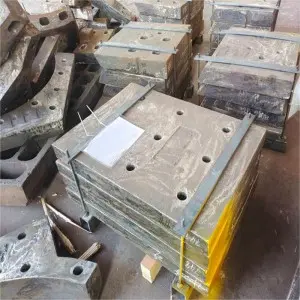
Surface Cleaning & Pre-Job Preparation
Thorough surface preparation is the foundation of proper application. Residual old backing compound, oil stains or rust will severely weaken bonding strength.
After removing worn liners, use chisels or pneumatic picks to completely clear leftover epoxy residue, rust and grease from the inner surfaces of the head center and adjustment ring.
Wipe all contact surfaces with industrial solvents such as acetone or professional degreasers to remove oil and dust. Make sure all surfaces are fully dry.
Apply a thin layer of lubricant or dedicated release agent on non-bonding areas of the cone head or adjustment ring inner wall. It will not affect adhesion, but facilitate liner disassembly during future replacement.
Lift and position new liners temporarily. Use wooden wedges or locating pins to maintain a uniform gap (generally 25 mm to 50 mm, refer to the equipment manual) around the liner and substrate. Seal bolt holes and bottom gaps with sealing tape, putty or modeling clay to prevent epoxy leakage during pouring.
The recommended working ambient temperature ranges from 10°C to 30°C. In low-temperature environments, preheat Component A (resin) to 30°C – 40°C to reduce viscosity. Do not exceed the temperature limit specified by the product manual.
Precise Proportioning & Mixing of Two-Component Epoxy Resin
Most crusher backing compound consists of Component A (resin) and Component B (curing agent). Always weigh materials strictly in accordance with the manufacturer’s stated weight ratio (common ratios: 10:1 or 2:1; some products adopt 1:1 volume ratio).
Stir Component A thoroughly in its original drum first, especially for filler-loaded resin which tends to settle. Then pour it into a clean mixing bucket.
Add Component B into Component A. Use a low-speed electric drill with a mixing paddle to stir in one single direction for 3 to 5 minutes. Scrape the bottom and inner sides of the bucket fully until the mixture shows uniform color and texture with no streaks. Uneven mixing is the primary cause of partial incomplete curing and insufficient structural strength.
The mixed epoxy will trigger an exothermic reaction immediately. Complete all pouring work within the specified pot life (normally 15 to 30 minutes at 25°C). Mix small batches multiple times to avoid material waste and premature gelation.
Pouring & Venting Operations for Epoxy Resin on Liner Back
Pour the mixed epoxy continuously and slowly from the lowest point of the gap between the liner and cone (or adjustment ring). Let the liquid fill the cavity naturally by gravity. Do not pour from multiple points at the same time, as this will trap air inside.
Tap the outer wall of the liner gently with a rubber mallet during pouring. This helps release trapped air and guides epoxy to flow into blind corners.
Keep pouring until epoxy overflows evenly from the top gap or preset vent holes, which indicates the back cavity is fully filled.
Build temporary baffles on top for extra-wide gaps to prevent overflow. Never pour partially mixed material with uneven color.
Curing Period & Pre-Operation Inspection
Leave the assembly stationary for epoxy curing at room temperature. It generally reaches initial hardness within around 12 hours in summer, while a 24-hour curing period is recommended in winter. Full design strength is achieved after 24 to 48 hours, depending on product specifications and ambient temperature.
Do not move the equipment or touch liners during curing. Once fully cured, remove positioning wooden wedges and sealing materials, then clean up excess epoxy residue.
Never run no-load tests or put the crusher into formal operation until the backing compound is fully cured. Feeding materials in advance will cause liner displacement or backing cracking.
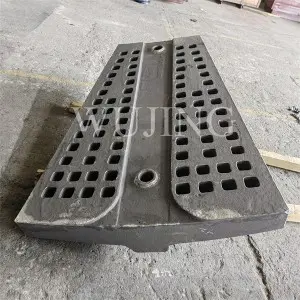
Safety Protection & Common Mistake Reminders
All operators must wear nitrile gloves, safety goggles and organic vapor respirators. Ensure sufficient ventilation in the working area to prevent uncured epoxy from contacting skin and eyes.
Frequent application errors are summarized as follows: pouring epoxy without degreasing surfaces, estimating ratio by volume instead of accurate weighing, insufficient stirring time, pouring thickened epoxy beyond pot life, and incomplete filling caused by failing to preheat resin in low-temperature conditions.
It is advised to record the brand, model, batch number of the crusher backing compound, together with working temperature and humidity every time liners are replaced, for full traceability.
Following the standard epoxy backing procedures for crusher liners can effectively extend the service life of wear parts and reduce main frame failure rates. It is a mandatory standard procedure for daily maintenance at crushing plants.
#CrusherBackingCompoundApplicationProcedure #ConeCrusherMantleBowlLinerEpoxyBacking #CrusherWearLinerEpoxyResinPouring #HeavyDutyCrusherBackingMixingRatio #FillCrusherLinerBackWithEpoxyResin #CrusherBackingCompoundCuringTime #ManganeseSteelJawPlateEpoxyBacking
Post time: Jun-09-2026