
Are you looking for a reliable crusher liner supplier in China? This comprehensive guide covers everything you need to know about sourcing from selecting the right crusher parts manufacturer to quality control, certifications, and logistics. Whether you are an importer, distributor, or B2B buyer, this article will help you make informed purchasing decisions and avoid costly mistakes when working with Chinese factories.
The global B2B procurement landscape for Crusher parts has evolved significantly in the past decade, with buyers increasingly turning to China for cost-effective, scalable, and customizable sourcing. China hosts the world’s largest concentration of crusher parts factories, where production capacity ranges from boutique workshops serving niche markets to fully integrated industrial parks producing tens of thousands of units per month.
For distributors, importers, and brand owners, understanding this landscape is the foundation of any successful sourcing strategy. The most reliable suppliers share three traits: documented production capacity, international compliance certifications, and transparent communication. Recognizing these traits early helps separate genuine manufacturers from trading middlemen who simply re-export finished goods.
Industry reports consistently show that buyers who invest time in pre-sourcing research reduce their defect rates by 30 to 40 percent compared to those who select suppliers purely on price. This article walks through the practical steps used by experienced procurement teams to secure a competitive edge in the crusher parts market.
Key Supplier Selection Criteria
Choosing the right crusher parts supplier requires more than comparing product photos and price lists. Buyers should systematically evaluate suppliers against seven core criteria: production capacity relative to your order volume, vertical integration across key processes, in-house quality control, export experience in your target market, customer references and on-time delivery record, R&D and customization capability, and after-sales support.
For overseas importers, requesting a complete supplier audit checklist early in the conversation reveals a great deal about operational maturity. Mature suppliers respond within 48 hours with documented answers about factory area, daily output, lead time, payment terms, and compliance documents.
A practical first step is to check whether the supplier participates in industry exhibitions (Canton Fair, Automechanika, Cosmoprof, etc.) and whether they publish regular updates on product innovations. Tip: Request a list of buyers in your region (with permission) so you can verify field performance.
Quality Standards and Certifications
Quality assurance is non-negotiable when sourcing crusher parts from overseas suppliers. At minimum, a credible manufacturer should hold certifications aligned with your destination market: ISO 9001 for quality management, plus product-specific standards such as CE (Europe), FCC (USA), RoHS (environmental compliance), and where applicable FDA, REACH, or CCC.
Documented quality control procedures should cover incoming raw materials, in-process inspections, and pre-shipment testing. Ask to see sample inspection reports and inquire whether the factory uses AQL sampling standards (commonly 1.0, 1.5, or 2.5). Established suppliers will have dedicated QC staff and digital tracking systems.
Engage third-party inspection agencies (SGS, TUV, Bureau Veritas) for first-time orders. Costs typically run 1-3 percent of order value but protect against significant downstream losses. Strong recommendation: Lock down quality standards in the purchase contract, including defect thresholds, AQL, and remediation clauses.
Cost Breakdown and MOQ Strategy
Cost transparency is essential when negotiating with Chinese suppliers. A typical FOB price consists of five components: raw materials, manufacturing labor, factory overhead, packaging, and supplier margin. For most crusher parts categories, raw materials and labor account for 50 to 70 percent of the final price.
Customization costs vary significantly: color changes often add 3-5 percent, while tooling modifications for new SKUs can add 8-15 percent to setup fees amortized over the order quantity. MOQ (Minimum Order Quantity) is a key negotiation lever – many factories will lower MOQ requirements for repeat orders or in exchange for a small premium per unit.
Build a complete landed-cost model that includes: unit price, tooling/setup fees, packaging, inland freight to port, sea or air freight, customs duties, last-mile delivery, and inspection fees. Many first-time importers underestimate total landed cost by 20-30 percent. A clear cost model strengthens your negotiating position.
Logistics and Lead Time Management
Logistics planning is often the make-or-break factor for first-time crusher parts importers. Standard lead times from confirmed order to ex-factory delivery range from 15-30 days for stock items, 30-45 days for made-to-order, and 45-90 days when tooling is required.
For shipping methods, sea freight (FCL or LCL) is the most cost-effective for full containers; expect 25-40 days from Shenzhen or Ningbo to North America or Europe. Air freight cuts transit time to 5-10 days at 4-6x the cost but works well for samples and time-sensitive restocks. Express couriers (DHL, FedEx) suit small packages under 100 kg.
Key documentation to coordinate includes commercial invoice, packing list, certificate of origin, and product-specific compliance certificates. Many established factories pre-coordinate documentation with their buyer’s freight forwarder – always confirm the shipping Incoterms (FOB, CIF, DDP) in the purchase contract to avoid misunderstandings later.
Product Range and Specifications
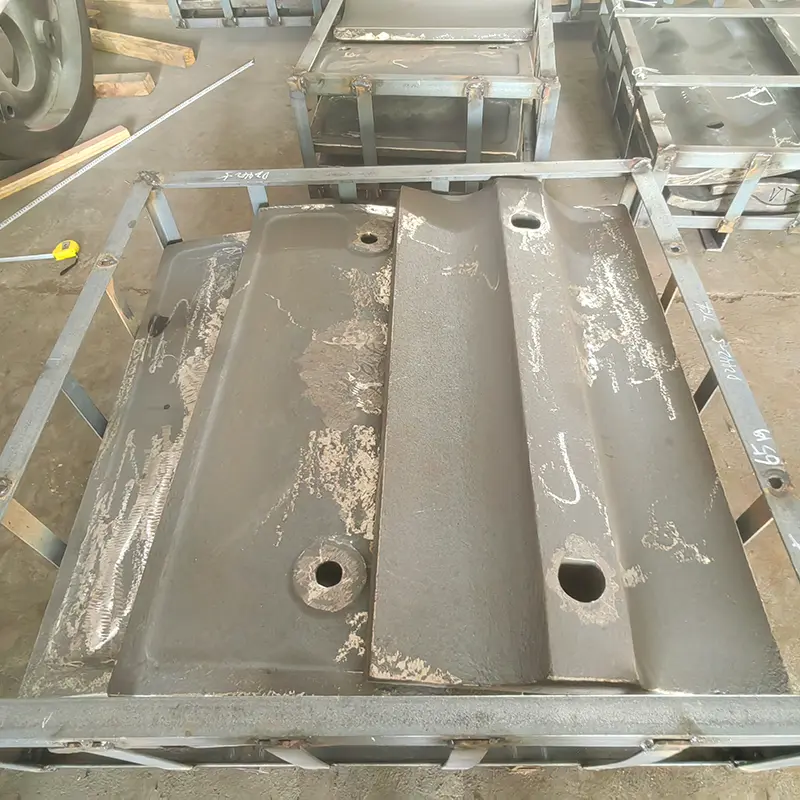
A reliable crusher liner supplier should offer a comprehensive product range covering core categories plus custom variants. This protects your business from supply disruption and supports growth into adjacent SKUs without re-sourcing from scratch.
Standard product ranges in the crusher parts category typically include multiple price tiers (entry-level, mid-range, premium), multiple specifications (sizes, capacities, colors), and customization options (logo printing, packaging design, OEM brand partnerships). Look for suppliers who can produce the full matrix – this signals genuine manufacturing depth.
Explore the product catalog at our online store to see the full range and detailed specifications. Each product page lists materials, dimensions, certifications, lead time, and recommended shipping methods, helping you plan your purchasing decisions with confidence. Our team can also share custom configuration options for projects with specific requirements.
Building a Long-Term Partnership
Building a long-term partnership with the right crusher parts supplier delivers compounding returns. Repeat buyers typically receive 5-15 percent price reductions after three to five orders, priority scheduling during peak seasons, and first access to new product launches and exclusive color or specification options.
Strong partnerships are built on clear communication, predictable ordering patterns, and mutual investment. Schedule quarterly business reviews with your supplier to discuss market trends, forecast demand, and explore innovation opportunities. Be transparent about sales projections so the factory can plan capacity and inventory accordingly.
For buyers seeking a strategic partner in the crusher parts space, our team is ready to support you with custom sourcing solutions, OEM/ODM services, and reliable after-sales support. Reach out today for a free consultation, sample requests, or a tailored quotation for your next project.
Frequently Asked Questions
Q1: What is the typical MOQ for crusher liner supplier?
Most Chinese factories set MOQ at 300-500 units for stock specifications and 1,000+ units for custom configurations. However, experienced suppliers often accommodate smaller first orders if the buyer commits to a repeat schedule.
Q2: How long does a typical crusher parts order take from confirmation to delivery?
Standard production lead time is 15-30 days, plus 25-40 days for sea freight. Sample orders ship within 7-10 days. Customization (color, branding, tooling) adds 7-15 days to the production phase.
Q3: Which certifications should I require for crusher liner supplier?
Baseline requirements include ISO 9001 for quality management. Product-specific standards vary by market: CE and RoHS for Europe, FCC for USA, FDA if applicable, REACH for chemical compliance. Always request copies of certificates with the factory name visible.
Q4: How do I verify a supplier before placing a bulk order?
Schedule a video factory audit (live walkthrough of production lines, QC stations, warehouses), request references from buyers in your target market, and commission a third-party inspection (SGS, TUV, Bureau Veritas) for the first production batch before shipment.
Q5: What payment terms are standard for crusher parts imports?
The most common terms are 30 percent T/T deposit with balance against B/L copy for established relationships, or 100 percent irrevocable L/C for larger transactions. New buyers typically pay 50/50 until trust is established. Avoid 100 percent upfront unless dealing with verified longstanding partners.
Conclusion
Sourcing crusher liner from China offers tremendous opportunities for businesses worldwide when approached with the right framework. By understanding the market landscape, applying systematic supplier selection criteria, verifying certifications, optimizing cost structures, planning logistics carefully, and investing in long-term relationships, you can maximize your sourcing success and build a sustainable competitive advantage. Start your journey today by exploring our product catalog and contacting our team for a personalized quote tailored to your specific requirements.
Post time: Aug-12-2026