
In the sand & aggregate and mineral crushing industries, initial investment decisions often define operational limits for the next 5–10 years. Many plant owners adopt compact, “just-enough” layouts early on to control CAPEX (Capital Expenditure), only to face bottlenecks: no physical space for expansion, or costly shutdowns for retrofitting when market demand surges.
From dual perspectives of EPC engineering procurement and operational management, this article breaks down how to lay a foundation for future capacity growth during the procurement phase — through modular design, forward-looking equipment selection, and rational layout planning — enabling low-cost, smooth production upgrades.
1. Core Strategy: Shift from “Fixed” Thinking to “Modular” Architecture
Traditional stick-built production lines rely on equipment fixed to concrete foundations, meaning expansion often requires full demolition and reconstruction.
The core of a modern scalable production line is modularity.
1.1 Three Major Expansion Advantages of Modular Design
Space Decoupling
Separate the entire line into independent functional modules: feeding, primary crushing, secondary crushing, screening, and washing. When expanding capacity later, only new modules need to be inserted in reserved zones or single bottleneck modules replaced — without full-line shutdown and reconstruction.
Standardized Interfaces
Require suppliers to adopt unified conveyor widths, discharge heights, and electrical interfaces during procurement. This ensures future new modules support plug-and-play integration with existing systems, drastically reducing secondary engineering costs.
Relocation & Site Transfer Value
For contract crushing services or depleting mines, modular production lines can be disassembled and moved to new mining areas, protecting upfront investment.
1.2 Layout Planning: Reserve Space for “Future Equipment”
During the project feasibility study, site planning should follow the 1.5x Principle:
Horizontal Expansion Reserve
Reserve open space on one side of the line (typically screening or fine crushing section) large enough for a second identical machine. Avoid placing silos, power distribution rooms, or utilities along future expansion paths.
Vertical Expansion Reserve
Where land is limited, use steel-framed structures instead of single-layer flat layouts from the initial design stage. Later capacity growth can be achieved vertically by raising structures or adding layered screening equipment.
2. Equipment Procurement & Selection: “Over-Capacity” Configuration at Critical Nodes
Equipment selection directly determines marginal costs during expansion. A smart approach is moderately forward-looking investment at key bottlenecks.
2.1 Conveying Systems: The “Vascular” Bottleneck of Expansion
Belt Width & Speed Reserve
For main discharge conveyors, select motor power and belt width based on 120%–130% of future peak capacity. Post-expansion, only drive pulley replacement or speed adjustment is needed, avoiding full replacement of expensive conveyor systems.
Buffer Hopper Volume
Increasing buffer hopper capacity is the most cost-effective expansion method. Large silos absorb upstream capacity fluctuations and provide buffer time for downstream equipment upgrades.
2.2 Main Crushing Equipment: Focus on “Interfaces” Rather Than Just Tonnage
Foundation Load Reserve
When pouring foundations for cone crushers or jaw crushers, require designers to calculate dynamic loads for one-size-larger models. Future upgrades can use direct hoisting of higher-capacity main units without blasting or rebuilding foundations.
Electrical Capacity Reserve
Reserve 20%–30% spare capacity in high-voltage cabinets and transformers. Adding a 200kW crusher only requires connecting to reserved circuits, whereas substation expansion takes months and high costs.
2.3 Screening & Washing: The Most Likely Expansion Bottlenecks
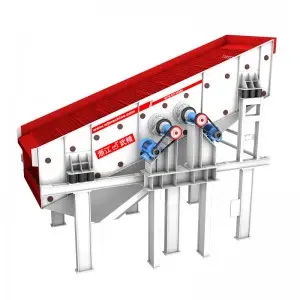
Screening area and sand washer capacity are often hard constraints. During procurement, choose modular vibrating screens and combined sand washing machines. Smooth upgrades can be achieved by parallel unit addition or switching to larger-screen-area models.
3. Control Systems & Infrastructure: The Invisible “Soft” Scalability
3.1 Scalability of Control Systems (PLC / SCADA)
Distributed I/O Architecture
Avoid centralized I/O cabinets. Specify distributed remote I/O stations with at least 20% reserved I/O points. New modules only require nearby I/O extensions, not full rewiring to the main control room.
Network Architecture Reserve
Use industrial Ethernet for the main control network with reserved optical cable redundancy. This ensures control signals from new modules connect seamlessly to the existing SCADA system.
3.2 Public Utility Reserves
Water & Electrical Interfaces
Pre-embed water pipes and cable conduits in reserved expansion zones. Expansion only requires endpoint connection, avoiding secondary excavation.
Environmental Facilities
Dust removal fans and dust collection areas should support over 30% capacity expansion. New production lines can connect directly to main ducts without replacing primary fans.
4. Procurement Checklist
When issuing an RFQ to equipment suppliers or EPC contractors, always include these key questions:
Modularity: Is the line designed with standard modules? Can capacity be increased to ______ tph by adding modules later?
Interface Standards: Are conveyor heights and widths unified? Does electrical control support plug-and-play for new modules?
Layout Drawings: Provide a general layout plan including future expansion reserved areas.
Foundation Load: Have foundations been sized for larger-capacity equipment?
Control Capacity: Do PLC and power distribution panels have at least 20% spare capacity?
#CrushingProductionLineScalability #ModularCrushingScreening #AggregatePlantFutureExpansion #MiningPlantModularDesign #AggregateProcessingLayout #CrusherConveyorCapacityReserve #ScalableVibratingScreenLayout
Post time: May-29-2026