
The vibration and noise generated by the crushers in mines and infrastructure sites during operation are like an “invisible burden”. Severe vibration not only accelerates the wear of the equipment’s own components, but also causes continuous impact on the foundation, leading to problems such as cracking and settlement. High-decibel noise may cross the red line of environmental regulations in different regions. The core components such as shock-absorbing springs and rubber pads are precisely the key to solving these problems. They act as a “buffer barrier” between the equipment and the foundation, creating a virtuous cycle of stable operation and compliant production.
Shock-absorbing springs: The “Elastic Defense Line” against high-frequency vibrations
The high-frequency vibration of the eccentric shaft rotation of the crusher is the main source of impact on the foundation. Shock-absorbing springs, with their excellent elastic deformation capacity, have become the core components for absorbing such vibrations. High-quality shock-absorbing springs are made of high-strength alloy materials and strengthened through heat treatment processes. They can maintain a stable elastic coefficient after thousands of vibration cycles, avoiding the attenuation of shock absorption effect due to metal fatigue.
In practical applications, its adaptability is particularly important. For instance, in the open-pit operation scenarios of South American mines, crushers often encounter the problem of unstable foundations caused by complex terrains. By pairing multiple sets of series-connected shock-absorbing springs, the force of vibration transmitted to the ground can be reduced by more than 40%, effectively protecting the safety of the foundation of temporary infrastructure. Meanwhile, the high-temperature resistance and corrosion resistance of the spring can also meet the long-term operation requirements in the humid and hot environment of Southeast Asia, reducing the downtime losses caused by the damage of accessories.
Rubber pads: They play a dual role in low-frequency buffering and noise reduction through sealing
Compared with the targeted high-frequency vibration of shock-absorbing springs, rubber pads demonstrate unique advantages in absorbing low-frequency vibration and blocking noise. The special shock-absorbing pads made of nitrile rubber or natural rubber have a porous structure inside. Through the process of pore compression and rebound, they can gradually dissolve the low-frequency vibration waves during the operation of the equipment layer by layer. At the same time, they closely adhere to the contact surface between the equipment base and the foundation, blocking the noise transmission path.
This feature makes it highly favored in crushing operations around cities – in some European countries, the standards for limiting industrial noise are strict. Laying thickened rubber pads between the crusher base and the foundation can reduce on-site noise by 15-20 decibels, easily meeting the EU environmental protection standards. In addition, the anti-slip and sealing performance of rubber pads can prevent dust and sewage from seeping into the gaps at the bottom of the equipment, which not only protects the foundation concrete from erosion but also reduces the cleaning and maintenance costs of the equipment.
Accessory combination: Optimization logic based on scene requirements
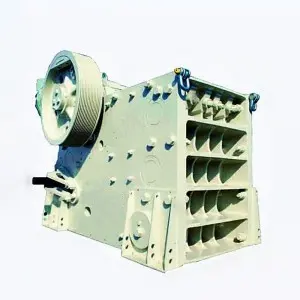
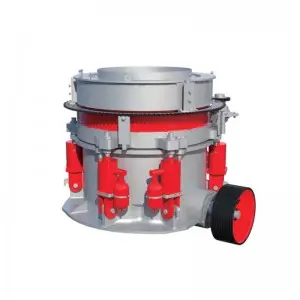
The effects of shock absorption and noise isolation cannot be fully achieved by a single accessory. They need to be combined and matched according to the type of equipment and the working environment. For heavy-duty jaw crushers, the impact and vibration at the moment of startup are relatively large. A dual buffering structure of “spring + rubber pad” can be adopted. First, the spring is used to counteract the instantaneous impact force, and then the rubber pad absorbs the residual vibration. For small and medium-sized cone crushers, the operation vibration is relatively stable, and the use of high-elastic rubber pads alone can meet the basic protection requirements.
At the same time, the differences in regional environments also determine the direction of accessory selection. In the cold regions of North America, rubber pads that can withstand low temperatures should be selected to prevent the materials from becoming hard, brittle and cracking due to low temperatures. In the sandy and dusty areas of Africa, shock-absorbing springs paired with dust covers can reduce sand and dust wear and extend service life. These detailed considerations are precisely the core that enables the device to stably adapt to different scenarios.
The efficient operation of the crusher cannot be achieved without effective protection of the foundation. Although shock-absorbing springs and rubber pads are small, they bear the important mission of ensuring the stability and compliance of equipment production. Only by grasping the characteristics of different shock-absorbing accessories and conducting scientific selection in combination with the working environment and equipment requirements can the crusher maximize its production capacity while minimizing the impact on the foundation and achieving long-term economic benefits.
Post time: Dec-04-2025