
The Challenges of Crushing High-Hardness Rocks Like Granite and Basalt and Equipment Selection
Selecting crushing equipment for high-hardness rocks is a core challenge for quarries and mining enterprises. Especially with rocks like granite and basalt, which have a Mohs hardness of 6-7, issues such as rapid wear of components, low crushing efficiency, and substandard finished particle size frequently arise. This directly leads to over 30% increased downtime and rising procurement costs. Drawing on over 10 years of industry experience, this article dissects the core challenges of crushing high-hardness rock. It provides targeted equipment selection solutions and component pairing recommendations to help you reduce wear and tear while boosting production capacity. Next, we tackle these challenges step by step, starting with the core crushing stages.
Primary Crushing Stage: How to Select Equipment to Handle the Impact Loads of High-Hardness Rock?
Primary crushing serves as the initial stage for high-hardness rock processing, demanding exceptional impact resistance and wear tolerance.
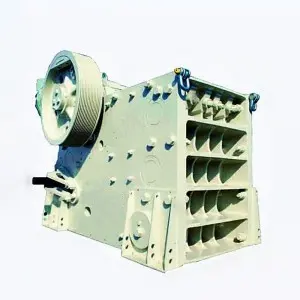
Conventional jaw crushers equipped with standard jaw plates typically require replacement every 7-10 days when processing basalt, often accompanied by excessive frame vibration. Data indicates that heavy-duty jaw crushers optimized for high-hardness applications exhibit 40% greater impact load capacity than standard models.
We served a Southeast Asian granite quarry that previously used standard jaw crushers to process granite with a compressive strength of 180 MPa. Daily output was only 280 tons, with jaw plates replaced weekly. After switching to a heavy-duty jaw crusher equipped with high-manganese steel jaw plates, daily output increased to 420 tons, the jaw plate replacement cycle extended to 25 days, and overall crushing costs decreased by 28%.
Many cross-border buyers ask: “For coarse crushing of high-hardness rock, should we choose a jaw crusher or a gyratory crusher?” If daily output requirements are below 500 tons, jaw crushers offer better cost-effectiveness and easier maintenance. For daily outputs exceeding 1,000 tons, gyratory crushers demonstrate superior continuous crushing advantages, making them suitable for large-scale mining projects.
Medium and Fine Crushing Stage: How to Balance Crushing Efficiency and Product Quality for High-Hardness Rock?
Medium and fine crushing directly determines final particle size. High-hardness rock often suffers from over-crushing or uneven particle distribution at this stage.
Impact crushers processing high-hardness rock experience rapid hammer plate wear and produce high needle and flake content—typically exceeding 15%. In contrast, cone crushers utilize a layer compression crushing principle that effectively controls particle size, reducing needle and flake content to below 8%.
In a domestic expressway construction project requiring basalt crushing for manufactured sand, the specification demanded ≥85% of finished product within the 0-5mm range. Initial use of an impact crusher yielded only 62% qualified output, with impact plates requiring replacement every 3 days. Switching to a hydraulic cone crusher increased qualified output to 93% and extended plate replacement intervals to 18 days, fully meeting project requirements.
Common industry question: “For crushing high-hardness rock, should we choose single-cylinder or multi-cylinder cone crushers?” Single-cylinder cone crushers feature simpler structures and lower maintenance costs, making them suitable for moderately hard to high-hardness rocks. Multi-cylinder cone crushers offer higher crushing precision and greater stability, ideal for ultra-high-hardness rocks with compressive strengths exceeding 200 MPa, and are better suited for automated production lines.
Part Selection: Which components reduce wear costs when crushing high-hardness rock?
Components are the core consumables in high-hardness crushing. Selecting the right parts can directly reduce wear costs by over 30%.
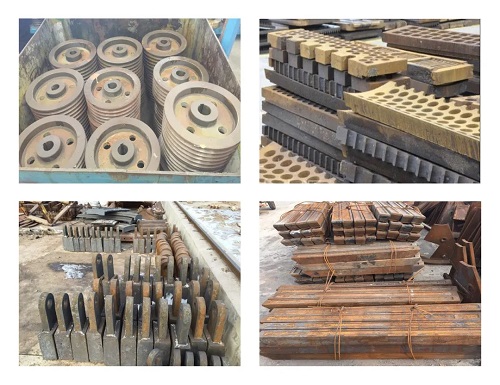
Material selection is critical for key components in high-hardness crushing, such as jaw plates, blow bars, and cone liners. Standard high-manganese steel components exhibit short lifespans when crushing granite. In contrast, components made from high-chromium alloy or dual-metal composite materials offer 2-3 times greater wear resistance.
A European cross-border procurement company initially selected standard high-manganese steel impact plates for its client’s basalt crushing operation. This resulted in an average monthly replacement rate of 4 sets, each costing €800. After switching to our recommended dual-metal composite hammers, monthly replacements dropped to just one set, reducing monthly accessory costs to €2,200 and increasing customer repurchase rates by 45%.
Purchasers often ask: “For high-hardness crushing accessories, should price or wear resistance be prioritized?” Prioritize wear resistance. Take jaw plates as an example: while premium high-chromium alloy jaw plates cost 20% more per unit, their service life is 2.5 times longer than standard plates. This results in lower overall wear costs, reduces downtime for replacements, and boosts overall production capacity.
FAQ: Frequently Asked Questions on Procuring High-Hardness Rock Crushing Equipment and Parts
1. What key parameters should be prioritized when selecting equipment for crushing granite and basalt?
Focus on three core parameters:
1. Maximum feed size must match raw material dimensions.
2. Crushing chamber type: Deep chambers for primary crushing improve feed efficiency; steep cone chambers for secondary/tertiary crushing optimize layer crushing.
3. Motor power: Select motors with 10%-15% power redundancy for high-hardness crushing to prevent overload shutdowns.
2. What factors influence the service life of high-hardness crushing components?
Three primary factors: material compatibility—select wear-resistant materials matching rock hardness; feed uniformity—irregular feeding accelerates localized wear; and lubrication maintenance—regular lubrication reduces friction loss and extends lifespan.
3. What compliance requirements should be considered when cross-border procuring high-hardness crushing equipment?
First, ensure compliance with target market safety certifications (e.g., EU CE, North American CSA). Second, ensure compatibility with local voltage standards and environmental regulations, including dust emission and noise control thresholds. Finally, verify the interchangeability of components to facilitate local procurement for replacements.
In summary, the core of selecting high-hardness rock crushing equipment lies in “process adaptation + component matching.” Opt for heavy-duty impact crushers for primary crushing, high-precision laminar crushers for secondary and tertiary crushing, and prioritize highly wear-resistant materials for components. Mastering these principles effectively addresses core pain points like rapid wear and low efficiency. For cross-border buyers and B2B clients, precise equipment and component selection is key to controlling costs and enhancing competitiveness. A scientifically sound selection strategy also increases the profit potential of high-hardness rock crushing projects, making equipment selection the core enabler for achieving this goal.
Meta Description
This article dissects the core challenges of crushing high-hardness rocks like granite and basalt, providing equipment selection solutions and accessory pairing recommendations for coarse and medium-fine crushing stages. Combining real-world industry cases and data, it helps cross-border buyers and B2B clients reduce losses and boost production capacity. Master the essentials of selecting high-hardness rock crushing equipment, precisely match your needs, and get professional selection guidance now!
Core Keywords
High-hardness rock crushing equipment selection, granite crushing equipment selection, basalt crushing accessories, cross-border procurement of crusher parts, high-wear-resistant crusher jaw plates
Post time: Jan-08-2026