
The gyratory crusher spider cap looks like a small component, but it protects a critical structural part of the crusher and its failure can stop production for days. In gyratory and rotary crushers, the spider assembly supports the main shaft and distributes feed. The spider cap sits at the top, protecting the spider from impact and wear. This guide explains what a gyratory crusher spider cap does, why it matters, and how to source quality replacements.
Anatomy of a Gyratory Crusher Spider
A gyratory crusher crushes rock between a fixed concave and a moving mantle driven by an eccentric. At the top, the spider structure supports the main shaft and provides the upper bearing. The spider has arms that also serve as a feed distributor, guiding material into the crushing chamber.
The spider cap is the protective cover on top of the spider. It is often the first component to contact falling rock and must absorb impacts that would otherwise damage the spider casting. Understanding this structure helps maintenance teams identify why caps wear and when to replace them.
What the Spider Cap Does
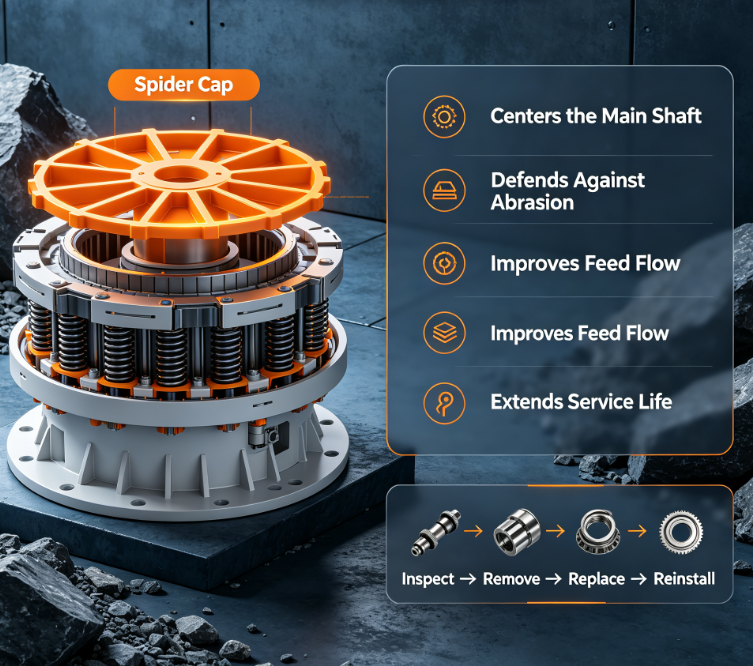
The spider cap serves several roles. It protects the spider and the top bearing from direct impact by falling rock, prevents contamination of the bearing area, and helps distribute feed evenly into the chamber. It also provides a wear surface that is cheaper to replace than the spider itself.
Replacing a cap is far more economical than repairing a spider. Because the cap absorbs wear, operators can extend the life of the expensive spider casting by changing the cap on a schedule. This makes the cap a small but strategically important spare part in crusher maintenance programs.
Wear and Failure Modes
Spider caps wear from repeated impact of feed material and from abrasion as rock slides across the surface. Cracking can occur under severe impact, especially in hard rock operations. Misalignment or feed issues can accelerate uneven wear, concentrating stress on one side.
Watch for the warning signs. Increased feed bounce, unusual noise, or visible cracking signal that the cap needs inspection. Uneven wear patterns may indicate feed distribution problems that should be corrected at the crusher, not just by replacing the cap.
Material Selection for Spider Caps
Spider caps are typically cast in high manganese steel because of its work hardening properties under impact. Manganese steel surfaces harden where they are struck, making them ideal for impact and abrasion environments. High chrome iron or alloy steel may suit specific low-impact, high-abrasion conditions.
Match the material to your crushing duty. For hard rock with heavy impact, manganese steel resists cracking and work hardens effectively. For abrasive but lower-impact feeds, alternative alloys may offer longer wear life. Consult the foundry with your application details for a recommendation.
Sourcing Replacement Spider Caps
When sourcing a spider cap, provide the exact crusher model, original part number, dimensions, and drawings if available. A foundry with experience casting crusher parts can reverse-engineer or manufacture to your specification, ensuring proper fit and performance.
Verify quality with material certificates and dimensional checks. The cap must match the mounting face and feed opening precisely. Ask about heat treatment and testing, and confirm the foundry can produce consistent quality across batches for your maintenance program.
Maintenance and Inspection Tips
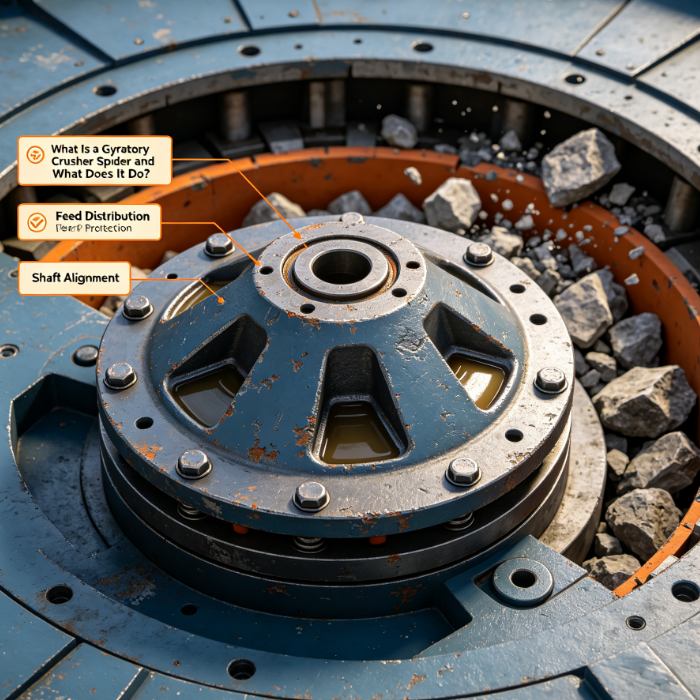
Add spider caps to your scheduled inspection checklist. Check for cracks, excessive wear, and loose mounting during every crusher shutdown. Keep one or two spare caps in stock so a worn cap does not force unplanned downtime.
Monitor feed distribution. Uneven wear on the cap often signals that the feed arrangement needs adjustment. Correcting feed issues at the source reduces cap wear and extends the life of the entire spider assembly. Document cap life to build a reliable replacement schedule.
Frequently Asked Questions
How often should a spider cap be replaced?
Replacement intervals depend on feed size, hardness, and impact intensity. Inspect the cap during every scheduled shutdown and track its life in your maintenance records to establish a reliable replacement schedule.
What material is best for gyratory crusher spider caps?
High manganese steel is the standard choice because it work hardens under impact, providing excellent resistance to cracking and wear. For special conditions, alloy steel or high chrome iron may be recommended. Consult the foundry with your application.
Can I order a spider cap without original drawings?
Yes. A foundry experienced with crusher parts can measure your existing component or the crusher and produce a replacement to match. Provide the crusher model and any part numbers to help identify the correct specification.
What happens if a spider cap fails?
A failed cap can expose the spider and top bearing to impact and contamination, leading to expensive repairs and extended downtime. Replacing the cap before failure protects the structural components and keeps the crusher running.
Do you provide certificates with spider caps?
Reputable foundries provide material certificates, heat treatment records, and dimensional inspection reports. Request these documents with your order to verify the castings meet your specification.
Conclusion
The gyratory crusher spider cap is a small component with a critical job: protecting the spider and top bearing from impact while helping distribute feed. Choosing the right material, sourcing from a quality foundry, and inspecting it regularly keeps your crusher running and lowers total maintenance cost.
Post time: Aug-20-2026