
In sand & aggregate production and mining operations, capacity directly determines a company’s profitability. When facing production bottlenecks, many purchasers and engineers immediately consider investing in new, larger-scale crushing equipment. However, equipment replacement involves high capital expenditure, extended downtime for installation, and staff training — resulting in long lead times and high costs.
In fact, by optimizing operating parameters and maintenance procedures for existing equipment, it is often possible to increase capacity by 10%–30% without replacing main machines. Drawing from on-site engineering experience, this article shares 5 practical operational tips to help you maximize the potential of your current crushing production line.
1. Optimize Feeding Method: Ensure “Full Chamber” Instead of “Overloading”
Feeding is the starting point of the crushing process and a key factor affecting capacity. Many operators mistakenly believe that “more feed equals better output,” leading to congestion at the crusher inlet. This not only increases motor load but also causes clogging and abnormal wear.
The correct approach is to achieve layer crushing or full-chamber operation.
For cone crushers and jaw crushers, maintain a consistently filled crushing chamber to enable inter-particle compression, rather than direct impact between material and liners. This improves crushing efficiency and significantly reduces wear on consumable parts such as concave liners, mantle liners, and jaw plates.
Operating Recommendations
Adjust the frequency and amplitude of the feeder to ensure uniform and continuous material flow into the crusher.
For cone crushers, avoid eccentric feeding and ensure even material distribution around the crushing chamber to prevent excessive vibration.
2. Precisely Control Closed Side Setting (CSS): Balance Gradation and Throughput
Closed Side Setting (CSS) is the core parameter determining crusher capacity and product gradation.
A smaller discharge opening produces finer material but reduces throughput and capacity. Conversely, an overly large opening boosts capacity but results in poor particle shape, high flakiness content, and potential non-compliance with aggregate standards.
Many sites blindly widen the discharge opening to pursue high output, which reduces downstream screening efficiency, increases circulating load, and ultimately lowers overall system capacity.
Operating Recommendations
Accurately measure and set CSS according to final product size requirements.
In multi-stage crushing, optimize discharge opening allocation across stages. For example, match the discharge opening of the primary jaw crusher with the feed opening of the secondary cone crusher to avoid bottleneck effects.
Regularly inspect the hydraulic adjustment system to ensure set CSS matches actual values.
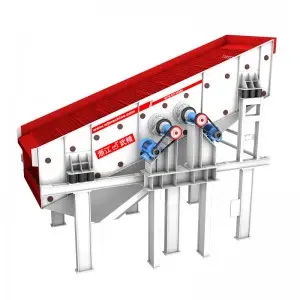
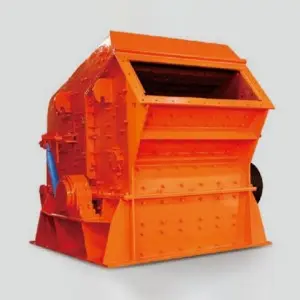
3. Enhance Pre-Screening: Eliminate Ineffective Crushing
Raw feed for primary crushing often contains a large volume of fine particles already meeting finished product size. When these fine materials enter the crusher, they occupy effective chamber space and accelerate wear — a phenomenon known as ineffective crushing.
Operating Recommendations
Install a pre-screening unit (such as a grizzly screen or vibrating screen) before or on the primary feeder.
Pre-screening removes 30%–40% of fine particles in advance, directing them to finished product stockpiles or downstream screening. This allows the crusher to focus on coarse material, greatly improving efficiency while reducing dust and wear part consumption.
4. Optimize Closed Circuit Circulation: Control Circulating Load Ratio
In closed-circuit crushing systems, vibrating screens return oversize material to the crusher for re-crushing. Low screening efficiency traps qualified material in the recirculating load, causing crusher overloading, over-crushing, and excessive circulation.
Operating Recommendations
Regularly inspect screen cloth wear and replace damaged or clogged meshes promptly.
Optimize screen inclination, amplitude, and frequency to achieve screening efficiency above 90%.
For cone crushers, maintain an ideal circulating load ratio between 0.5 and 0.8.
Reducing circulating load allows the crusher to focus on new feed, significantly improving total system capacity.
5. Standardize Wear Part Installation & Maintenance: Details Determine Efficiency
The condition of wear parts — including liners, jaw plates, and hammers — directly affects crusher performance. Improper installation or neglected maintenance leads to reduced crushing efficiency.
Operating Recommendations
Proper Torque: Secure all liner bolts to prevent movement or loosening during operation, which distorts the crushing chamber profile.
Even Wear: For jaw plates, reverse them when one side is heavily worn to ensure double-sided utilization and extended service life.
Timely Replacement: Replace wear parts once they reach replacement limits. Over-worn liners alter discharge opening size, coarsening product and lowering output.
Backing Compound Application: When replacing cone crusher concaves or jaw plates, use epoxy backing compound to fill gaps between liners and the main frame. This prevents movement, improves pressure transmission, and boosts crushing efficiency.
Conclusion
Increasing crusher capacity does not require equipment replacement.
With these 5 operational tips, you can significantly improve productivity of existing machinery without additional fixed-asset investment. The key is adopting scientific equipment management, refining details, and continuously optimizing operating parameters.
For procurement decision-makers, integrating these practices into equipment maintenance standards helps reduce cost per ton and enhance overall market competitiveness.
#BoostCrusherCapacity #CrusherOperatingTips #IncreaseOutputWithoutEquipmentReplacement #ConeCrusherOptimization #JawCrusherMaintenance #CSSAdjustment #ImportanceOfPreScreening #ClosedCircuitOptimization #WearPartsMaintenance #CrushingLineEfficiency
Post time: Jun-15-2026