
Global Sand and Aggregate Market Demand Surges: How to Choose an Efficient Crushing and Screening Production Line?
As the global infrastructure boom and urbanization drive the demand for sand and aggregates to an all-time high, the first reaction of many investors is: launch a production line immediately to seize the market. But reality is often harsh—equipment imported with huge investment fails to reach the designed output; the produced aggregates have poor particle shape and many needle-like pieces, making it impossible to sell at a good price; if there is a problem in any link of the production line, the entire line shuts down, and maintenance and waiting for parts often take one or two weeks, watching orders slip away. The root cause of the problem often lies in hidden dangers Bury during the initial planning of the selection and configuration of the crushing and screening production line.
Faced with numerous equipment models and technical parameters, how to make a decision without regret? This article does not talk about empty theories, but aims to provide you with a clear decision-making framework. We will start with the most front-end raw material analysis, gradually break down the selection logic of core links such as crushing, screening, and conveying, and help you avoid common “pits” with real cases. After reading, you will understand that a truly efficient production line is not just a simple stack of single equipment, but an “organism” that fights collaboratively. Now, we start from the starting point that determines everything—your “raw materials” and “products”.
I. What Is the “Temperament” of Your Stone? Raw Material and Product Analysis Is the First Lesson in Selection
“Cook according to the ingredients, tailor clothes according to the figure”—this old saying is most appropriate for selecting a production line. Many investors make a mistake in the first step: they first take a fancy to a certain “popular” crusher, then try to make their own stone adapt to it. The correct order is exactly the opposite: you must first figure out two things—what are you feeding in (raw material characteristics)? What do you want to get (finished product specifications and market demand)?
Raw material characteristics are far more than just “granite” or “limestone”. You need to clearly know its hardness (Mohs hardness), compressive strength, silicon content, water content, proportion of soil inclusions, and the maximum feed size. For example, even for granite, some mining sites in Sichuan have extremely high silicon content and strong abrasiveness, while rocks in some mining areas in Fujian are relatively fragile. Using a plan for processing limestone to deal with highly abrasive granite will make the wear rate of wear parts beyond your imagination.
Product planning directly determines your profit margin. Do you focus on high-value-added high-quality manufactured sand and premium gravel, or mainly meet the demand for basic filling materials? What is the price difference of various specifications of stone such as 12-13mm and 5-10mm in the local market? For example, around a large infrastructure project in Vietnam, there is strong demand and firm prices for high-quality 0-5mm manufactured sand. Then your production line configuration must strengthen sand making and shaping capabilities, rather than just pursuing the output of primary crushing.
A Real Lesson:
An investor in East China invested in a 300-ton-per-hour production line in Anhui, aiming to produce construction gravel. The ore source was medium-hard limestone, but it contained about 15% soil and weathered materials. He ignored the pre-screening and soil cleaning links during the design, leading to a large amount of soil entering the crushing chamber. This not only severely blocked the screen and reduced efficiency, but also the produced aggregates had excessive mud powder on the surface, which could only be sold as low-grade materials, with a profit per ton nearly 20 yuan lower than similar clean products. Later, he had to invest additional funds to add a sand washing machine, resulting in changes to the production line layout and huge losses.
Common User Question: What if the raw material composition of my mine is complex, with both hard and soft materials?
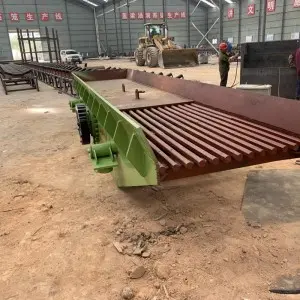
This is a very common situation. The best strategy is “screen first, then crush, and process separately”. Install a heavy-duty grizzly screen or vibrating screen before primary crushing to pre-separate soil, fine materials and some soft weathered materials from the original materials. Softer materials can be separately processed by a crusher based on lamination principle (such as impact crusher) to obtain better particle shape; hard materials enter a more suitable crusher (such as cone crusher). Although the initial investment is slightly higher, it can protect the main crusher, stabilize the quality of finished products, and achieve higher comprehensive benefits in the long run.
II. How to Configure the Core “Iron Fists”? The Dialectics of Selection for Primary, Secondary and Fine Crushing
After determining the “ingredients” and “menu”, the next step is to select the “wok” and “kitchen knife”—the crushing main machine. This is the core investment of the production line and the most technically challenging part. The core principle is: select equipment with the most matching principle according to the different tasks of the crushing stage, and let them work collaboratively.
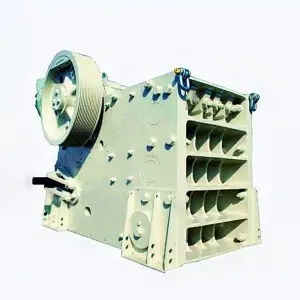
1. Primary Crushing (Jaw Crusher): What Is Needed Is “Eating More” and “Eating Steadily”
As the “tiger’s mouth” of the production line, the jaw crusher’s task is to “chew” oversized raw materials into sizes that can enter the next process (usually below 200-300mm). When selecting, the primary concern is whether its “feed opening size” can swallow your largest ore block, and whether its “processing capacity” meets your overall output target. In addition, the swing mode of the moving jaw (such as the arc movement of European-style jaw crushers) can bring a larger crushing ratio and more uniform discharge, which is crucial for the stability of subsequent processes. Don’t just look at the price—a high-quality high-manganese steel jaw plate and an ordinary cast steel part may differ several times in wear life, directly related to the operating cost.
2. Secondary and Fine Crushing (Cone Crusher vs. Impact Crusher): This Is Not a Multiple-Choice Question, but an Application Question
This is the most confusing link. The core difference lies in the crushing principle:
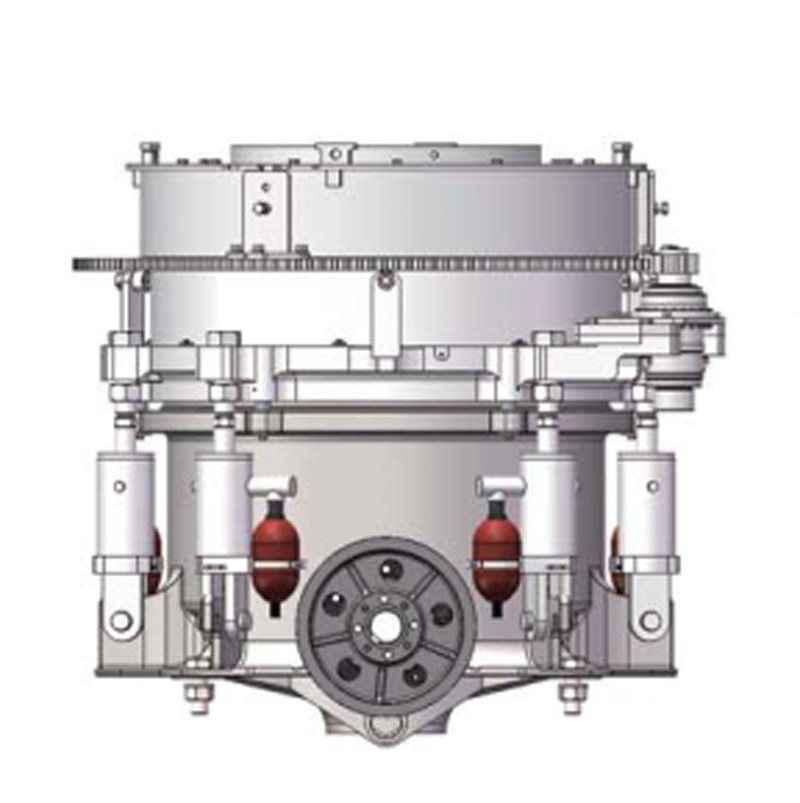
Cone Crusher: Adopts laminated crushing, crushing rocks through extrusion and bending. Its advantages are long service life of wear parts, relatively low power consumption, and it is especially suitable for crushing abrasive materials with medium hardness or above (such as granite, basalt). Its disadvantages are that the finished product particle shape is slightly poor, the content of needle-like pieces may be high, the structure is complex, and the maintenance technology requirements are high.
Impact Crusher: Adopts impact crushing, stone hitting iron or stone hitting stone. Its biggest advantage is good finished product particle shape, with many cubes, especially suitable for producing high-grade aggregates and manufactured sand. Its disadvantages are that wear parts such as blow bars wear quickly, and the maintenance cost will increase significantly when processing high-hardness and high-silicon materials.
How to choose? Look at your “priority list”:
If your raw material has high hardness and strong abrasiveness, and stable operation and reducing the consumption of wearing parts are the primary considerations, then the cone crusher is a more reliable choice. You can improve the particle shape by optimizing the cavity type and adding a shaping machine later.
If your raw material has medium or low hardness (such as limestone), and the market has strict requirements on aggregate particle shape and large price differences, then the impact crusher can directly produce high-value products. Even if the blow bars are replaced frequently, the comprehensive benefit may be better.
Southeast Asia Case:
A granite quarry in Sumatra, Indonesia, initially adopted impact crushers for the entire set. After commissioning, it was found that although the particle shape was good, the blow bars had to be replaced or turned every week on average under high pressure, resulting in frequent shutdowns and great distress for workers. Later, after transformation, the second and third stages of crushing were replaced with multi-cylinder hydraulic cone crushers. After adjustment, the service life of wear parts was extended to several months, and the continuous operation rate of the production line increased from less than 70% to more than 90%. Although the needle-like pieces of finished products increased slightly, it was optimized by adjusting the screening and adding a vertical shaft impact crusher (shaping sand making machine), and finally achieved a balance between output, cost and quality.
III. “Nervous System” and “Circulatory System”: The Synergistic Way of Screening, Conveying and Environmental Protection
With the main machine determined, the efficient and smooth operation of the production line depends on the reasonable design of the “nervous system” (screening) and “circulatory system” (conveying). The bottleneck of many production lines is not in crushing, but in insufficient screening or poor material transfer.
Screening System: More Layers Are Not Necessarily Better
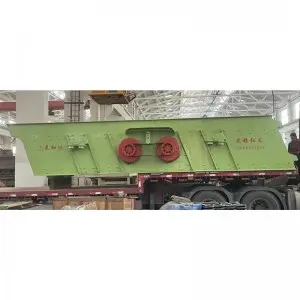
The core task of the vibrating screen is “precision classification”. When selecting, the screen area and the number of screen layers are the keys. Insufficient area will cause materials to be unable to be fully screened, and a large number of qualified finished products will return to the crusher as “return materials”, resulting in “over-crushing” and energy waste, which is called “excessively high circulating load in the closed circuit”. An experience is that the screening capacity is usually designed as 1.2-1.5 times the crushing capacity, leaving sufficient margin. The matching of screen mesh specifications is also crucial, which needs to perfectly match the finished product specifications you plan to produce, and consider a certain clogging rate. In the case of wet materials, consider using anti-clogging screens or adding screen cleaning devices (such as bouncing balls).
Conveying System: Ensure Materials “Do Not Wait, Do Not Pile Up”
The bandwidth, belt speed and inclination angle of the belt conveyor must be accurately matched with the output of each link. Designing reasonable guide chutes and buffer devices at transfer points (such as when the crusher discharge port falls onto the belt) can greatly reduce dust and belt wear. A common but costly mistake is: to save initial investment, use a belt with too large an inclination angle or insufficient bandwidth in key lifting sections, leading to serious material sliding and spilling, heavy on-site pollution, and the need for manual continuous cleaning, which instead increases long-term costs.
Environmental Protection and Intelligence: No Longer “Optional”, but “Mandatory”
Globally, especially in emerging markets, environmental protection requirements are becoming increasingly strict. A modern production line must incorporate environmental protection into core design: configure high-efficiency pulse bag filters at key dust emission points of the entire plant (feeding, crushing, screening, and blanking points); plan a water washing and sewage recycling system for wet materials after screening or materials that need cleaning. In addition, a simple central control system (which can display equipment status, output, current, etc.) can greatly improve management efficiency and fault response speed, which is an important part of the production line value.
IV. From “Equipment Procurement” to “Solution Procurement”: Calculate the Full-Life Cycle Economic Account
In the end, choosing a production line is not buying a pile of steel, but purchasing a “solution” that continuously generates cash flow for the next 5-10 years. Therefore, your evaluation criteria must shift from “initial investment” to “full-life cycle cost”.
This includes: the energy consumption of the equipment itself, the consumption speed and unit price of wearing parts (jaw plates, blow bars, mantles, screens, etc.), the convenience of daily maintenance, the time and cost required for major overhauls, and whether the supplier can provide timely technical support and stable parts supply. A supplier with cheap parts but a three-month delivery time may cause you to lose weeks of output value.
Final Advice for You: Be a “Demanding Visitor”.
Before making a decision, try to visit the on-site cases recommended by the equipment manufacturer that are in production and have similar raw materials to yours. Don’t just look at the prototypes in the factory exhibition hall. Listen to whether the operation sound of that production line is stable, look at the particle shape of the finished aggregates at the discharge port, and chat with the on-site operators or bosses to ask them what the most common problems are and whether the parts supply is smooth. This first-hand information is far more valuable than gorgeous brochures.
In summary, with the surging global demand for sand and aggregates today, choosing an efficient crushing and screening production line is a strategic investment. The secret of success is to abandon the single equipment thinking, adhere to systematic planning starting from raw materials and products, select main machines with matching principles for the core crushing section, attach great importance to the collaborative design of screening, conveying and environmental protection, and finally make a wise decision from the perspective of full-life cycle cost, thus building a real capacity and cost advantage in the fierce market competition.
FAQ (Common Industry Questions)
Q1: Are production lines with 200-ton, 500-ton and 1000-ton per hour just differences in equipment model scaling?
A1: By no means a simple scaling. Small-scale production lines (such as 200 tons/hour) pay more attention to flexibility and return on investment, and the configuration may be relatively simplified. Large-scale production lines (such as 1000 tons/hour) are complex industrial systems, and the requirements for process design, equipment reliability, automatic control, environmental protection treatment and material turnover capacity increase exponentially. It needs to consider more redundant design, more efficient dust collection system, more complex electrical control and possible water recycling system. The complexity of its planning, installation and commissioning is far higher than that of small-scale lines.
Q2: How to choose between a mobile crushing and screening station and a fixed production line?
A2: It depends on your ore source conditions and investment strategy. Fixed production lines are suitable for projects with stable ore sources, long mining cycles (such as more than 5 years) and large scales. They have low per-ton cost, high output and easy high automation. The core advantage of mobile crushers (especially tire-type) is “flexibility”, which is suitable for scenarios with scattered mining areas, frequent relocation, demolition projects or extremely high requirements for commissioning speed. It sacrifices part of the single-machine output and energy economy in exchange for unparalleled mobility. At present, there is also a “semi-mobile” design as a compromise.
Q3: In production line design, how to balance finished product particle shape and production cost?
A3: This is a classic trade-off. Pursuing extreme particle shape (such as aggregates used in high-grade concrete) usually requires increasing the number of crushing stages (such as adopting a three-stage crushing process of “jaw crusher + cone crusher + impact crusher”), or using equipment mainly based on impact crushing principle (such as impact crusher, vertical shaft impact crusher), which will increase equipment investment, energy consumption and wear part consumption. For infrastructure aggregates with no extreme requirements on particle shape, adopting a two-stage and one-closed-circuit process of “jaw crusher + cone crusher”, and optimizing the cone crusher cavity type and screening, is a more economical scheme. The key is whether the increase in your product price can cover the additional cost for improving particle shape.
Meta Description
Under the global infrastructure boom, how to invest in a truly efficient crushing and screening production line? Avoid the traps of substandard output, poor particle shape and frequent failures. From raw material analysis to main machine selection, from screening configuration to cost accounting, this article provides you with a systematic selection guide and practical cases to help you make wise decisions and win at the starting line. Read now to get professional solutions.
Keywords
crushing and screening production line selection, sand and aggregate production line configuration, efficient crusher selection, difference between cone crusher and impact crusher, mobile crushing station
Post time: Mar-19-2026