
The Warehouse With Four Hundred SKUs and Nothing In It
A mining group running nine crushers across three sites held roughly four hundred distinct wear part numbers. Their annual consumption value was high, their stock value was high, and yet every one of the three sites had experienced a stoppage in the previous year caused by a part that was in stock at a different site. The problem was not how much they were buying, it was that each machine had been bought at a different time from a different supplier with a different parts philosophy, so nothing was interchangeable and nothing could be consolidated. Standardisation is the least glamorous and most reliable way to cut wear cost in a mixed fleet, and it starts long before the next purchase order. You cannot consolidate a fleet by buying harder. You consolidate it by deciding which machines are allowed to differ.
Map the Fleet Before Touching the Supplier List
Build one table with four columns per crusher: model and series, chamber and liner configuration, annual consumption in tonnes or sets, and the parts that are unique to that machine. The last column is the one that matters, because the cost of a mixed fleet is concentrated in the parts that only one machine uses. You will usually find that a small number of machines generate most of the unique part numbers, and those machines are either candidates for replacement at the next capital cycle or candidates for a deliberate stocking decision. Everything else can be grouped.
Group by Series, Not by Machine
Crusher families share geometry, and suppliers already organise their programmes around series rather than individual machines. Where your fleet contains several machines in the same series, specify the whole group on one programme so that the mantle, bowl liner and support castings are produced to one set of drawings and can be moved between sites. The benefit is not a better unit price, it is that a part ordered for site A can be redirected to site B without a technical review. The smaller series are usually the ones that appear at several sites, so that is where consolidation should start. A programme of support castings for S2800/CS420 and H2800/CH420 can cover every machine in that band across the fleet from one drawing set.
The next size band up should be planned the same way. A group running larger secondary and tertiary machines can consolidate on support castings for S3800/CS430 and H3800/CH430 rather than treating each site as a separate ordering decision.
The top of the range follows the same rule and carries the most risk if it is ignored. The biggest units in a fleet are covered by support spares for S6800/CS660 and H6800/CH660, and in each case the point is identical: one planning unit, one drawing set, one stocking decision.
Decide Which Machines Are Allowed to Be Different
Not every crusher should be standardised. A machine dedicated to a single abrasive ore body may justify a bespoke alloy or profile that the rest of the fleet does not need. The discipline is to declare it: name the machines that are special, write down why, and give them their own stocking rule with a higher buffer, because special machines have long lead times by definition. The expensive outcome is a fleet where every machine is accidentally special because nobody ever decided otherwise. Everything not on the declared list should be pushed onto the standard programme at the next liner change, which is the natural moment to switch because the machine is already open.
Standardise the Support Castings Too
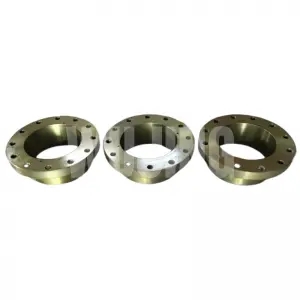
Fleet programmes usually cover the wear liners and forget the parts around them. Arm shields, top shells, feed plates and the structural castings that protect the machine rarely fail on a predictable schedule, and when they fail they are unique to the machine, which is exactly the profile of a part that causes a long stoppage. Include them in the fleet standard and hold one set per machine group rather than per machine, or accept a defined lead time and write it into the outage plan. A component such as the arm shield and top shell for CH and CS type crushers is a straightforward example of a part that should be grouped across the fleet rather than bought per machine.
The largest machines deserve the same treatment at the top end. A programme covering spare parts for CH540, CH550, CH780 and CH860 lets the biggest units in a fleet share a stocking decision, which is where the longest lead times and the highest outage cost usually sit.
One Drawing Set, One Revision Rule
Standardisation fails quietly when drawings drift. Require that every part on the fleet programme is produced to a single drawing with a revision number, and that any improvement, whether a profile change or an alloy change, is issued as a new revision with the old one retired. Two sites running the same part number from two different revisions is how a fleet loses the benefit of standardisation without anyone noticing, because the parts still fit and merely perform differently. Ask your supplier to maintain the revision register and to tell you in writing when a revision changes, and record the revision against each installation so that wear-life comparisons between sites mean something.
Measure Wear Life Per Site, Then Ask Why They Differ
Once the fleet is on one programme, differences in wear life between sites become visible and useful. Record tonnes per set by machine, and where two identical machines show materially different lives, look for the cause in feed size distribution, feed rate, chamber setting and tramp iron rather than in the casting. Standardised parts turn a mixed fleet into a controlled experiment, and the finding is almost always operational rather than metallurgical. That finding then feeds back into the specification, which is the point of standardising in the first place.
What to Ask the Foundry at the Next Review
Bring three things to the annual review: the fleet map with consumption per machine, the list of declared special machines, and the revision register. Ask which additional machines can move onto the standard programme at their next scheduled change, and what the consolidation does to the group’s total stock value. A fleet that reduces four hundred part numbers to a hundred and twenty does not need a better price. It needs fewer surprises, and standardisation delivers exactly that.
Related Pages
Jaw Plate Pricing Guide: Cost Analysis by Material Grade
Mantle vs Bowl Liner: Key Differences Every Aggregate Buyer Must Know
OEM vs Aftermarket Crusher Wear Parts
Post time: Oct-08-2026