
The Pattern Was on the Factory Floor and Nobody Owned It
A cement plant commissioned a set of custom mill liners from a foundry, approved the sample, and ran three years of reorders without a single quality issue. When the plant opened the supply to competitive tender, the foundry quoted a tooling charge for every repeat order, on the basis that the pattern had been built and stored at its own cost and remained its property. The plant’s view was that it had paid for the pattern through the unit price. No document settled the question either way. The tender was abandoned, the plant paid the charge, and a sourcing strategy that had been viable on paper turned out to be impossible in practice.
Patterns Are an Asset Someone Has to Own
Castings require tooling: a pattern for sand casting, a die for die casting, a set of core boxes where coring is involved. That tooling has a real cost, a finite storage life and a measurable effect on every future order, and it is almost never addressed in a purchase contract. Settle ownership, storage, maintenance and access in writing before the first casting is made, because the commercial position after three years of successful reorders is entirely determined by what was agreed in the first month.
Three Workable Ownership Models
There are three common arrangements. Under buyer ownership, the buyer pays tooling as a separate line, owns the pattern outright and can move it. Under supplier ownership, the foundry amortises tooling into the unit price and retains the pattern. Under shared ownership, the foundry holds and maintains the pattern but the buyer has a contractual right to have it released or copied.
Choose deliberately and write the choice down, with the release terms stated in measurable conditions. The dangerous position is the unstated one, where the buyer believes ownership was bought through volume and the foundry believes it was never sold.
Amortisation Should Be Visible, Not Hidden
Where tooling is amortised into unit price, the buyer is paying for it without knowing how much or for how long. Ask for the tooling cost and the amortisation quantity to be stated separately, even when the commercial structure keeps them inside the unit price. Once the amortisation quantity is known, the buyer knows when the tooling has been paid for and can reopen the price conversation on an informed basis. A unit price that never steps down after tooling is recovered is a margin, not a cost.
A mill lining system supporting a SAG mill of defined diameter involves substantial pattern work, and the amortisation on a liner set of this type is material enough to justify a separate clause. Agree the amortisation period at the same time as the price, not at the first reorder.
Storage, Maintenance and the Cost of Neglect
Patterns degrade. Wooden patterns warp and split in an unconditioned store, resin patterns age, core boxes lose dimensional accuracy, and steel dies corrode. Specify where the tooling is stored, in what condition, and who pays for refurbishment when it is needed. A pattern that has been stored poorly for three years will produce a casting that no longer fits, and the plant will blame the foundry for a storage decision neither party discussed.
Set a review interval on the tooling condition and require the foundry to report it. Where a plant orders infrequently, the tooling condition review is the only reliable protection against a surprise on the next order.
Reorder Accuracy Depends on the Reference Drawing
The second half of the problem is getting the same part twice. Reorders should reference a frozen drawing revision, a pattern number and a heat treatment specification, not a previous purchase order number. Purchase order numbers describe a transaction; they do not describe a geometry, and a foundry working from an old order number will faithfully reproduce a revision that has since been superseded.
Maintain a controlled revision register on the buyer side and require the foundry to quote against the stated revision on every order. Where a design change is made, confirm whether the existing pattern can be modified or whether new tooling is required, and settle who pays before the change is instructed.
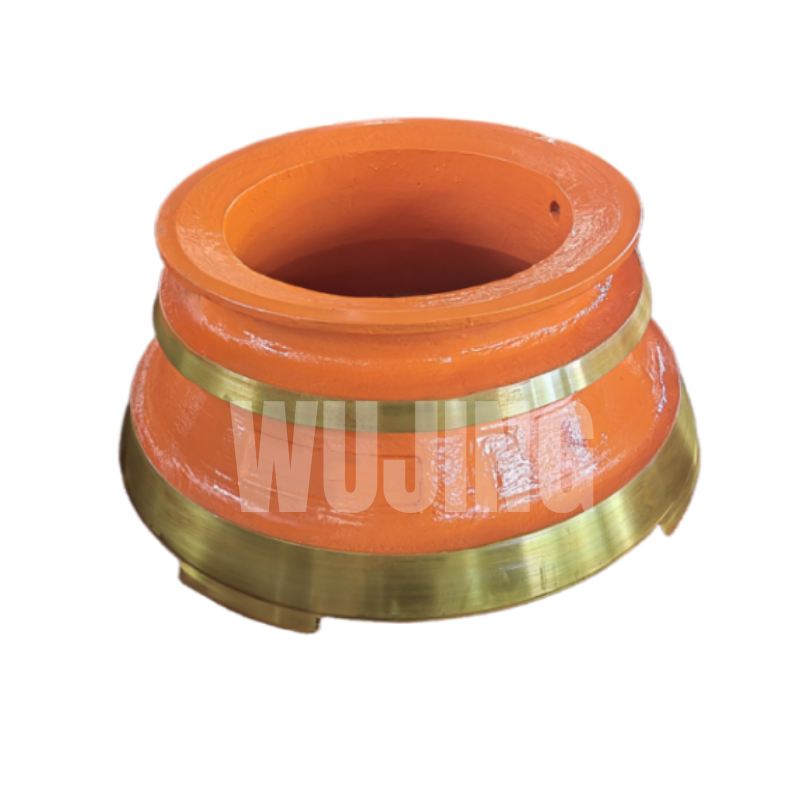
A mantle and bowl liner support covering HP and GP crushers spans multiple machine models, and each model needs its own pattern reference and its own revision control. Grouping several models under one blanket reorder description is how a plant receives a correct casting for the wrong crusher.
Alloy and Heat Treatment Belong in the Same Clause
Tooling is not the only thing that must be frozen. The alloy specification, the heat treatment cycle and the hardness acceptance range must be attached to the pattern reference so that a reorder reproduces the metallurgy as well as the shape. A casting that fits perfectly and wears out early is a metallurgical mismatch, and it is usually traced to a reorder that specified geometry and said nothing about heat treatment.
A blow bar for an impact crusher is a part where metallurgy dominates life, and the reorder clause should state the alloy grade, the heat treatment and the hardness range alongside the pattern number. Require a certificate against each reorder, matched to the heat number on the casting.
Plan the Exit Before You Need It
Single sourcing on custom castings is normal and often sensible, but it should be a decision rather than a trap. Negotiate the exit terms at the start: a defined release process for the tooling, a reasonable copying right, and a stated lead time for transfer. Most reasonable suppliers agree to these terms at the beginning of a relationship and resist them once they believe the volume is locked in. The plant in the opening story had to abandon a tender it had every commercial reason to run, because the one clause that mattered was never written.
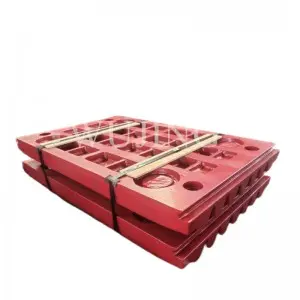
A spare parts support covering C series jaw crushers is typical of the multi-model programmes where a single plant runs several crusher generations under one maintenance budget.
A spare parts support for Sandvik JM series crushers adds the same complication again, and tooling, pattern references and revision control multiply across the fleet. Build one tooling register covering every model in the programme, and review it annually with the foundry, because the register is what makes both the reorders and the exit possible.
The Clause List
Before the first casting, settle six things in writing: who owns the tooling, what the tooling cost is and over what quantity it is amortised, where and how it is stored and who pays refurbishment, what drawing revision and pattern number govern each reorder, what alloy and heat treatment apply to each part, and how the tooling is released if the supply is moved. None of these clauses cost anything at the start and every one of them is expensive to negotiate later.
Related Pages
Jaw Plate Pricing Guide: Cost Analysis by Material Grade
Mantle vs Bowl Liner: Key Differences Every Aggregate Buyer Must Know
OEM vs Aftermarket Crusher Wear Parts
Post time: Sep-22-2026