
The New Crusher That Arrived Without a Wear Parts Plan
A cement group in South East Asia bought a cone crusher through a local agent on price, commissioned it successfully, and then discovered that the liners were a proprietary profile with a single supply route and a fourteen week lead time. The machine was competitive and the operating cost was not: within the first year the plant held two full sets of liner inventory it had not budgeted for, purely to protect itself against a supply chain it had no control over. The machine purchase and the wear parts strategy had been made by two different people in two different quarters, and the plant paid for that separation every month afterwards.
Cement plants and crushing contractors usually treat machine procurement and wear parts procurement as separate exercises, and in most organisations they are separate budgets with separate approvers. For a cone crusher, that separation is expensive, because the two decisions that most affect lifetime cost per tonne, the chamber profile and the liner metallurgy, are locked in at the moment the machine is chosen. Here is how to bring them together.
The Chamber Is a Wear Parts Decision Disguised as a Machine Decision
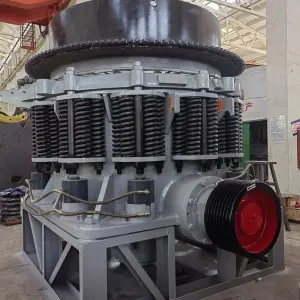
Every cone crusher offers a choice of chamber profiles, and the brochure presents them as a feed and product size question. They are also a liner life question. A fine chamber produces a better shaped product and wears liners faster at the discharge end, while a coarse chamber runs longer and produces a product that may need a second stage. Ask for the expected liner life in hours for each chamber option at your actual feed size and reduction ratio, and compare the options on cost per tonne including the liner changeout downtime, not on throughput alone. A machine such as the PYYQ series powerful cone crusher should be evaluated with that comparison in hand, because the chamber choice made on day one is very difficult and very expensive to reverse later.
Check the Liner Supply Route Before You Sign the Machine Order
Before committing to any machine, answer four questions in writing. Who can supply liners that fit, how many independent foundries produce the profile, what is the standard lead time from order to plant, and is there a pattern or drawing held that a second source could work from. A machine with a single-source liner profile is a long-term pricing exposure, and the discount negotiated on the machine is recovered many times over across a decade of liner purchases that the buyer cannot negotiate. Where a supplier can provide both the machine and the wearing parts from one source, the commercial conversation changes completely: the lifetime cost can be quoted as a single number and the supply risk sits with one party instead of two. A package built around a machine such as the WJ hydraulic cone crusher is worth structuring that way precisely because the chamber and the castings come from the same engineering record.
Spare Parts Coverage Beyond the Liners
Liners are the visible cost. The parts that stop a cone crusher are the ones behind them. Before commissioning, obtain a full spare parts coverage list for the specific model: the head, the main shaft assembly, the eccentric assembly, the bowl and adjustment components, the sealing and dust arrangement, and the hydraulic and lubrication spares. Confirm which of those are stocked by the supplier, which are made to order, and what the lead time is on each, and then decide deliberately which ones you hold on site. The plant that discovers it has no spare seal arrangement during the first scheduled liner change will lose more production in that week than the cost of holding the parts for five years. A defined support programme such as the spare parts support for the GP series cone crusher should be attached to the machine order as a named deliverable rather than requested after commissioning.
Standardise Across the Fleet Where the Machine Choice Allows It
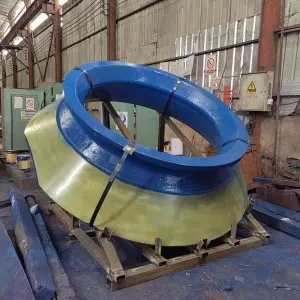
Plants running several crushers rarely chose them all at once, and the fleet grows by acquisition. Where a new machine is being added, make liner commonality a scored criterion alongside price and capacity, because a fleet that shares one liner family across two or three models carries a fraction of the inventory that three separate families require. The saving is in working capital and in the ability to move a liner set between machines during an unplanned failure, which is worth more than a small difference in unit price. Where full commonality is not achievable, at least standardise the manganese grade and the heat treatment specification across the fleet so that wear behaviour is predictable and comparison between machines is meaningful. A model-specific casting programme such as the high manganese steel wear resistant parts supporting the S2800/CS420 and H2800/CH420 illustrates the point: the same metallurgy discipline applied across a family makes the whole fleet easier to manage.
Installation and Commissioning Decide the First Liner Life
A new machine gives one chance to set the baseline. Insist that commissioning includes a documented record of closed side setting, feed distribution, liner seating and torque values, and keep that record as the reference for every future liner change. Most premature first-set liner failures on new machines trace back to feed distribution rather than metallurgy: a feed that enters the chamber off-centre wears one side of the mantle in weeks and produces a wear pattern that looks like a casting problem. Where the machine and the castings come from one supplier, that commissioning record also becomes the reference for the casting warranty, which removes an argument later. A compound configuration such as the PYSF series compound cone crusher should be handed over with that record as part of the acceptance documentation.
Write the Lifetime Cost Into the Machine Contract
The final step is to make the separation impossible. Ask the supplier to quote the machine together with a stated liner life in hours, a liner price held for a defined period, and a guaranteed lead time on repeat liner orders. Those three lines turn a machine purchase into a production cost commitment, and they are the only practical way to compare two machines that look similar on a specification sheet. Plants that adopt this approach consistently find that the cheapest machine is not the one with the lowest capital cost, and they find it out during evaluation rather than during the second year of operation.
Related Pages
Jaw Plate Pricing Guide: Cost Analysis by Material Grade
Mantle vs Bowl Liner: Key Differences Every Aggregate Buyer Must Know
OEM vs Aftermarket Crusher Wear Parts
Post time: Oct-10-2026