
Your cement plant buyer calls in late January to confirm a March delivery of CH540 bowl liners, but the foundry you used last year has already closed its furnace window for that quarter. Booking manganese steel castings on a reactive, order-by-order basis is the fastest way to miss the single production slot that protects your peak-season uptime. The fix is not a bigger purchase order; it is a framework agreement signed 4-6 months before the crusher wear parts actually need to ship. Most cement plants learn this the hard way, after a single missed liner shipment turns a planned maintenance window into a scramble for spot-market steel at double the price.
Why the furnace window closes long before your peak season
A foundry does not keep spare furnace capacity open waiting for a phone call, because every cold start of a melting line costs 8-14 hours and burns through expensive lining material. Wjfoundry and similar heavy casting shops plan their melt cycles around committed tonnage, and once a slot is allocated to another account it rarely opens again inside the same planning period, so the position that would have made your CH540 parts simply moves to a different customer who booked earlier. Wait until February to place a March order and the realistic lead time shifts from 6-8 weeks to 14-18 weeks, which lands your liners well after the crushing season starts.
The pattern repeats every year because cement plants run hard from April through October, yet most buyers start procurement conversations in the same quarter they need the steel. Recommend reserving your furnace slot in November or December, when the foundry is filling the following year’s calendar and will hold a position for a signed framework rather than a firm PO. A confirmed slot costs nothing until you release the draw-down, but it removes the single biggest source of peak-season downtime.
Which spare parts deserve a locked position in the annual agreement?
Not every wear part earns a locked position, because tying up capacity on slow-moving items just raises your carrying cost without protecting uptime. The parts that matter are the high-wear cone crusher spare parts that fail on a predictable cycle: bowl liners, mantles, concaves and the support components that sit behind them. The annotation buyers miss is that the support pieces often share the same mold base as the liner, so booking only the liner and skipping the support doubles the later rush.
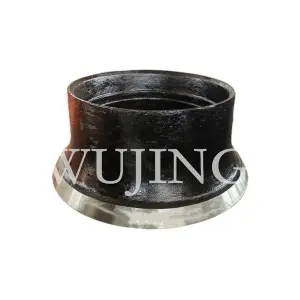
For the S3800 C430 and H3800 CH430 machine family, the high manganese steel wear resistant support parts for S3800 C430 H3800 CH430 cone crushers are the components to anchor the support portion of the agreement.
Group the parts by machine rather than by drawing number, because a maintenance planner thinks in “keep crusher 3 running”, not in “order casting 4471″. Building the list around the actual equipment you operate keeps the agreement readable and stops a critical support bracket from slipping off the schedule. The foundry also prefers model-grouped releases, since one pattern setup can then serve several line items in a single pour of your cement plant wear parts.
How to build a model-by-model parts package
A model-by-model package is the heart of any foundry capacity booking, because it converts a vague annual need into a scheduled melt. List every CH540 crusher parts requirement, plus CH550, CH780 and CH860 you run, plus the S6800 and H6800 cone crusher support units on the fine-crushing circuit, then estimate each machine’s cement plant wear parts consumption from the previous 12 months of tonnage. A common error is sizing the package from nameplate capacity instead of real throughput, which over-books the quiet machines and under-books the ones running double shifts.
For the CH540 through CH860 range, the spare parts package for CH540 CH550 CH780 CH860 cone crusher models covers the core bowl and mantle set your planning team should pre-position.
Add the supporting castings and the machine frames in the same release, because shipping the liner in June and the support in September forces two furnace bookings instead of one. Release the whole machine package on one purchase requisition so the foundry schedules a single melt and one inspection, cutting both lead time and freight. Whole-machine kits also let you negotiate a 3-5% volume allowance that disappears the moment you split the order.
Set a draw-down calendar against the package. A good framework releases 25-30% in the first slot, then 15-20% per quarter, so the foundry keeps a steady mould occupation without you funding a warehouse. Keep the final 10-15% as a call-off that you only convert when the wear measurement says the liner is actually thinning.
Reserve the furnace window for CH540, CH550, CH780 and CH860 bowl and mantle sets first.
Group the S3800, H3800, S6800 and H6800 support castings with the same liner release.
Add the PYYQ secondary crusher wear parts into the same annual package.
Hold blank billet for 10-15% of annual tonnage as the gap cover.
What should the supply agreement actually lock down?
A heavy casting supply agreement is only worth signing if it locks the three things that hurt you most: capacity, price and penalty. Capacity comes first, stated as a reserved furnace window and a guaranteed mould occupation for your model list. An agreement that promises “best efforts” on delivery gives the foundry an exit the week a larger order appears, so insist on a named slot with a confirmation number.
Lock the unit price for the agreement year, because manganese and scrap steel move 8-12% across a season and an open price clause quietly erodes every saving from the framework. Write the price against the agreed annual tonnage band, with a clear step only if your draw-down falls below 70% of the committed volume. That protects the foundry’s planning while keeping your budget flat through the peak.
The delivery penalty is the clause most buyers forget, yet it is the only part with teeth. A late casting that arrives 3 weeks after your planned shutdown turns a planned 48-hour liner change into a 12-day unplanned stop, so the penalty should scale with the delay, not sit at a flat token fee. Tie the penalty to the documented crusher casting lead time you agreed, measured from confirmed draw-down to FOB port.
If your plant also grinds clinker, fold the mill liner requirement into the same foundry capacity booking so your mill liner supplier and crusher foundry become the same partner.
Can safety stock replace a missed furnace booking?
Safety stock helps, but it is a cushion, not a substitute for the furnace slot, because a missed booking means no new steel is being poured at all. The annotation worth keeping is that billet pre-forms, or “blank billet”, let the foundry hold semi-finished stock that converts to your specific liner in 2-3 weeks instead of the full 8-10 week melt cycle.
Carry one spare bowl-and-mantle set per critical machine as physical safety stock, and ask the foundry to hold blank billet equivalent to 10-15% of annual tonnage. That combination covers a single unplanned failure without funding a full spare inventory across every model you own. The billet reserve is cheaper than finished castings because it has not yet consumed machining and pattern time.
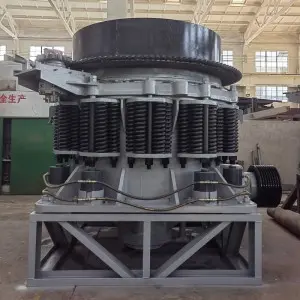
For the secondary crushing stage, the PYYQ series powerful cone crusher for cement plant secondary crushing is the machine whose wear parts should sit in the same package as your primary liners.
The conclusion for any buyer planning next season is blunt: the foundry calendar, not your purchase order, sets your uptime ceiling. Book the furnace window in the prior November, group parts by machine, lock capacity price and penalty in one agreement, and hold billet rather than finished stock for the gap. Do that and the March phone call becomes a routine draw-down instead of a crisis that shuts the crushing line.
Related Pages
Jaw Plate Pricing Guide: Cost Analysis by Material Grade
Mantle vs Bowl Liner: Key Differences Every Aggregate Buyer Must Know
OEM vs Aftermarket Crusher Wear Parts
Post time: Nov-04-2026