
The Liners Arrived on Time and the Plant Still Lost Four Days
A cement plant scheduled a major kiln outage, ordered the mill liners and crusher castings well ahead, and had everything on site before the shutdown began. Four days into the outage the mill crew discovered that the liner bolts supplied were two hundred short, the crusher mantle could not be lifted into position because the crane had been booked for the kiln, and the backing material specified had a cure time that did not fit the window. Every individual part had been delivered on schedule. The outage was still extended by four days, and in cement, four days of lost clinker production is worth more than the entire wear parts package by a wide margin. Shutdown planning is not a procurement task with a delivery date attached. It is a scheduling exercise in which the castings are one constraint among several.
Start From the Outage Window, Not From the Lead Time
The natural but wrong way to plan is to look at liner life, estimate when it runs out, and order backwards from there. The correct way is to start from the kiln outage calendar, which in most plants is fixed twelve to eighteen months ahead and is immovable. Once the window is known, everything else is derived: the castings must arrive early enough to be inspected, the crane and the crew must be booked, and the liner condition must be assessed far enough in advance to know what is actually being replaced. Work backwards from the outage date and set internal milestones at twelve months, six months, three months and two weeks, each with a named owner and a defined deliverable. A plan that only has a delivery date is not a plan.
Inspect the Mill Before You Order, Not During the Outage
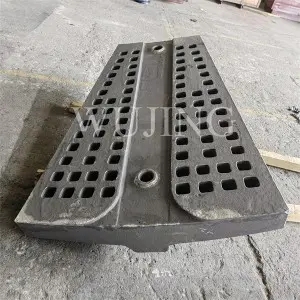
The most common cause of a mid-outage surprise is an order placed against assumed rather than measured condition. A mill liner campaign should include a thickness survey well before the order is placed, ideally using the last internal inspection, so that the quantity and the profile can be matched to the actual wear pattern rather than to the original drawing. Wear is rarely uniform: the feed end and the discharge end wear differently, and a full set is often not required. A mill lining system for a large diameter SAG mill is exactly the kind of package where a partial replacement decision has to be made months in advance, because the foundry needs the profile and the quantity confirmed before it can schedule a pour.
Sequence the Crusher Work Against the Mill Work
Crusher castings and mill liners are frequently replaced in the same outage, and they compete for the same crane, the same welders and the same fitters. Ball mill liners are a long, labour-intensive job that occupies the mill for most of the window, while crusher work is shorter but needs lifting capacity at a specific moment. If both jobs are scheduled to peak on day three, one of them will wait, and the waiting one is usually the crusher because the mill is on the critical path to clinker. Draw the outage as a day-by-day bar chart with the crane explicitly allocated, and share it with the supplier so that delivery can be staged to match rather than dumped on site in one delivery.

Order the Small Parts With the Big Ones
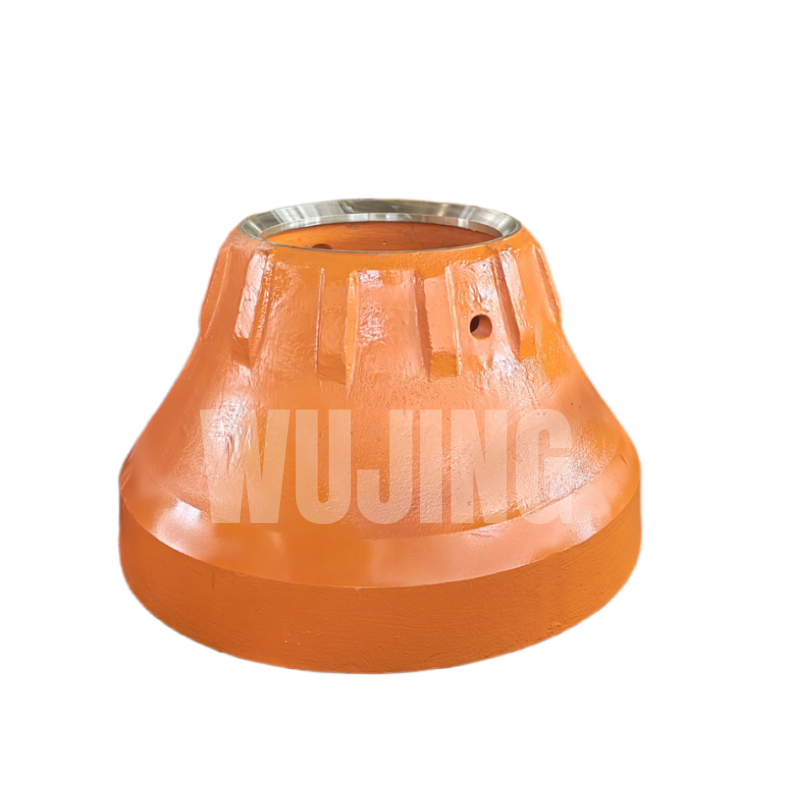
Bolts, nuts, washers, sealing strips, backing compound and lifting lugs are the items that stop a shutdown. A mantle and bowl liner set for a cone crusher is useless without its fixing hardware, and hardware is cheap, slow to source separately and easy to order short. Specify the hardware as a line item on the same purchase order, calculated from the liner count with a spare allowance of at least ten percent, and confirm the grade and thread form in writing. A two hundred bolt shortfall discovered on day four is the most expensive administrative error in this entire category, and it is entirely preventable.
Stage the Delivery and Inspect Before the Window Opens
Delivery should be early enough to allow a full incoming inspection and late enough not to occupy the laydown area for months. Cone crusher mantle and bowl liner castings must be checked for dimensional fit against the seat, for casting soundness and for the documentation that the plant’s own quality system will require. Agree a delivery date roughly four to six weeks before the outage, inspect everything on arrival, and resolve any discrepancy while there is still time to react. Anything discovered after the kiln stops is a crisis rather than a task.
Build the Critical Path in Writing
The plants that run predictable outages all do the same unglamorous thing: they write the sequence down, they allocate the crane by day, they confirm hardware quantities, and they hold a pre-shutdown meeting with the supplier three weeks out. That meeting should confirm delivery status, hardware counts, lifting plan, backing material cure times and crew availability, and it should produce a short written minute that everyone signs. The four days lost in the opening example were not lost to a bad casting. They were lost to a plan that existed only in someone’s head.
Related Pages
Jaw Plate Pricing Guide: Cost Analysis by Material Grade
Mantle vs Bowl Liner: Key Differences Every Aggregate Buyer Must Know
OEM vs Aftermarket Crusher Wear Parts
Post time: Oct-19-2026