
Ordered for a CH440, Delivered for a Different Generation
A cement plant needed wear and support castings for a cone crusher and ordered by model family, because that was the level of detail on the old purchase order it copied. The castings arrived on time and did not fit. The machine was a later generation than the family name implied, the chamber was not the standard one, and the support castings behind the liners were different parts with different numbers. In cone crusher wear, the model family is not the specification, and an order written at family level is an order written to fail, with a shutdown date attached to the failure.
The fix is a machine register and a specification habit that never allows an order to go out without model, generation, chamber and serial. Plants that hold that register get castings that fit first time, and they also get a casting programme that can be planned, budgeted and stocked instead of a sequence of emergency orders. Here is how to build it and what to write on the order.
The Register: Four Fields Per Machine
Every crusher in the fleet needs four recorded fields: full model designation including its generation, serial number, chamber or cavity designation, and the current mantle and concave combination in service. Those four fields answer most fitment questions before a supplier is ever asked, and they are the difference between a quotation prepared properly and one prepared from a guess. Photograph the machine data plate and file it with the register, because plates are painted over, damaged and replaced.
Include the operating context as well: feed material, top size, chosen closed side setting and the tonnes per campaign actually achieved. A casting specified without feed and setting data is specified blind, and the metallurgy chosen will be the supplier’s default rather than the right one for the duty.
Support Castings Are Not the Same Job as Wear Castings
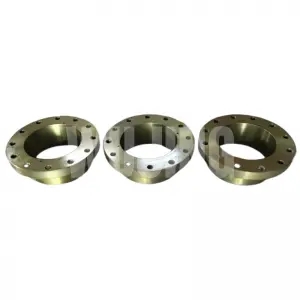
Most buyers think about the mantle and the concave and forget everything behind them. Support castings hold, protect and locate the wearing parts: the parts that take the load between the liner and the machine structure. They wear less predictably, they fail less often, and when they do fail the machine is out for longer, because nobody stocks them. Wear castings are planned; support castings are discovered, and that asymmetry is what turns a routine liner change into an extended outage. Put them into the spares review deliberately.
Specify them at the same time as the wearing set and by the same model reference, because they are model-specific in exactly the same way. A machine in the S3800 and CS430 or H3800 and CH430 class requires high manganese wear resistant parts made for those specific models, and a generic “support casting” order will not produce a part that fits.
Match the Wearing Set to the Machine and Buy It as a Set
A mantle and its concave wear together and are designed to work as a pair. Replacing one without the other to save cost changes the chamber geometry, reduces reduction efficiency and usually shortens the life of the new part. Mixing a new mantle with a half-worn concave is the most common false economy in cone crusher operation, and it costs more in throughput than it saves in steel. Order matched sets, and record the pair against the machine in the register.
Higher capacity machines in the same family need the same discipline at a larger scale, where the cost of a wrong part is measured in days rather than hours. For the S4800 and CS440 or H4800 and CH440 class, high manganese wear resistant parts for those models should be ordered as a matched set with the chamber designation confirmed against the data plate.
Buy the Spares Support Package With the Castings
For large machines the question is not only which castings, but what else the changeout consumes: the hardware, the backing material, the sealing items and the documented procedure. A supplier that can supply a model-specific spares support package removes the coordination burden from the plant, and it is worth asking for explicitly. A spares support package quoted with the castings closes the gap that otherwise appears on day two of the outage, when a consumable turns out not to be on site. Ask for it as a line on the quotation rather than as a favour.
On the largest machines in a fleet, the planning horizon is longer and the outage consequence is greater, so the spares package should be agreed even further ahead. For an H8800, CH870 or CH890 class machine, a dedicated spares support package should be specified and scheduled with the casting order, not assembled at the last minute.
The same applies one size down, where plants often assume the smaller machine is less demanding and discover the opposite when a single missing item stops the changeout. A plant running the S4800 and CS440 or H4800 and CH440 class should hold the matching spares support for those models as a kitted set, labelled against the machine serial.
Extend the Programme Beyond the Crusher
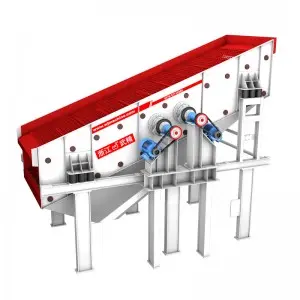
A crushing plant is a circuit, and the castings programme should follow the material rather than stop at the crusher discharge. Screening equipment runs the same manganese and wear logic, and its media and wear components are subject to the same fitment discipline: model-specific, chamber or deck-specific and ordered from a register. Plants that plan screening wear on the same calendar as crusher wear avoid the second outage nobody scheduled, which is the one that actually disrupts the production plan.
Include the auxiliary machines in the same supplier conversation where possible, because consolidation improves both lead time visibility and the supplier’s understanding of the circuit. Equipment such as a vibrating screen in the YK or KR series belongs on the same wear register as the crushers, with its own deck and media reference recorded.
What the Order Line Should Say
Model with generation, serial number, chamber designation, mantle and concave pair, manganese grade, feed material and top size, closed side setting, and whether support castings, spares and consumables are included. Eight fields, on every order line, and the plant stops discovering at the changeout that the casting was made for a machine it does not have.
Related Pages
Jaw Plate Pricing Guide: Cost Analysis by Material Grade
Mantle vs Bowl Liner: Key Differences Every Aggregate Buyer Must Know
OEM vs Aftermarket Crusher Wear Parts
Post time: Oct-13-2026